



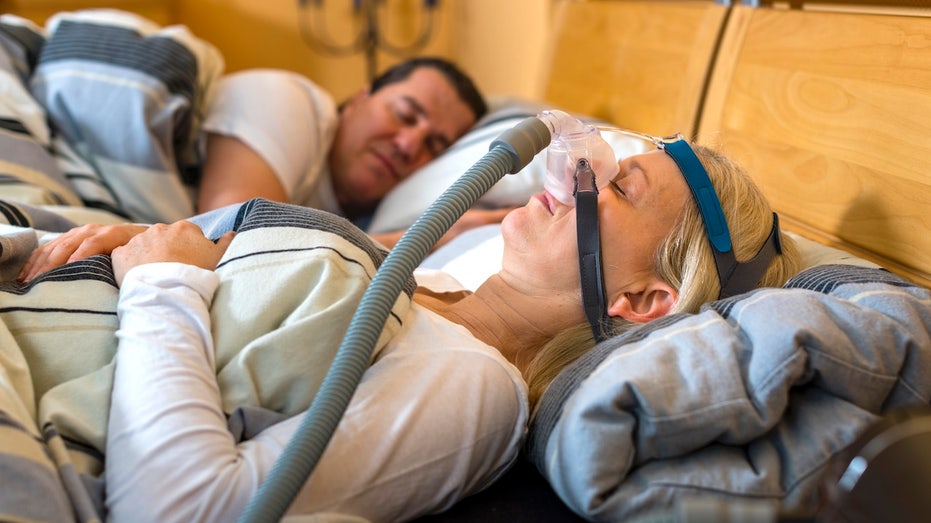
Sleep apnea may be quietly changing your body in an unexpected way, study finds
New research finds obstructive sleep apnea is associated with higher muscle mass index but lower muscle density, signaling possible metabolic dysfunction.
Researchers in Israel have discovered a difference in muscle structure in those with obstructive sleep apnea (OSA).
According to a new study published in the journal Sleep and Breathing, people with OSA tend to have a higher muscle mass index, reflecting greater area relative to height, as well as lower density.
This means people with OSA may look like they have more muscle, but that muscle tends to be less dense and potentially less functional.
POPULAR SLEEP POSITIONS COULD BE DAMAGING YOUR NERVES, ACCORDING TO EXPERTS
The researchers gathered data from 209 adults in an overnight sleep study who underwent chest or abdominal CT scans, according to a press release.
Compared with a control group, the researchers found that people with OSA were older, more often male and heavier on average. They were also more likely to have hypertension, cardiovascular disease and poorer oxygen levels during sleep.
The findings showed a significant link between OSA and higher muscle mass index. However, lower muscle density was more strongly associated with age and weight than with OSA.
Worse sleep apnea severity was linked with lower skeletal muscle density (SMD) and higher skeletal muscle index (SMI), indicating larger but less dense muscle.
SIMPLE NIGHTLY HABIT LINKED TO HEALTHIER BLOOD PRESSURE, STUDY SUGGESTS
Higher BMI was strongly linked with lower SMD and higher SMI, while older age was strongly linked with lower SMD.
Individuals over 60 years old and those with a BMI over 30 had much stronger links to lower muscle density than OSA alone, according to the research.
Dr. Wendy Troxel, a Utah-based licensed clinical psychologist and senior behavioral scientist at RAND, simplified the main study findings in an interview with Fox News Digital.
"Individuals with OSA may have more muscle mass, but that muscle may be less healthy because it contains more fat, which can impair strength and metabolic function," said Troxel, who was not involved in the study.
"This pattern overlaps with sarcopenia, a clinical condition where muscle becomes weaker and less efficient, even if muscle size doesn’t dramatically decline."
Troxel pointed out an "important" association between OSA severity and muscle quality, which was "modest compared to known risk factors, including age and body mass."
SLEEP PATTERNS COULD PREDICT RISK FOR DEMENTIA, CANCER AND STROKE, STUDY SUGGESTS
"[This indicates] that OSA may be one marker within a broader profile of metabolic risk," she said.
"Clinically, these findings highlight that OSA is much more than a nighttime breathing disorder. It may signal underlying metabolic dysfunction affecting multiple systems, including muscle health."
In an interview with Fox News Digital, study co-author Ariel Tarasiuk, professor at the department of physiology and cell biology at Israel’s Ben-Gurion University of the Negev, shared his thoughts on the "paradoxical" findings.
"Age and obesity appeared to have a stronger influence on muscle health than sleep apnea itself," he said. "This suggests that while sleep apnea may play a role, it is unlikely to be the primary factor driving these changes."
CLICK HERE TO SIGN UP FOR OUR HEALTH NEWSLETTER
Patients should be aware that sleep apnea is not just about snoring or poor sleep, Tarasiuk said, as it can affect overall health, including muscle function.
"Getting properly diagnosed and treated matters," he said. "CPAP therapy can make a real difference in improving breathing and sleep quality, but it’s only part of the picture."
CLICK HERE FOR MORE HEALTH STORIES
"Maintaining a healthy weight and staying physically active are equally important for muscle health and for reducing the severity of sleep apnea," he went on. "In short, treating sleep apnea is about protecting long-term health, not just getting a better night’s sleep."
Tarasiuk reminded clinicians that larger muscles don’t always mean healthier, as some muscles may be infiltrated with fat, which may reduce their strength and performance.
"This highlights the importance of looking beyond muscle size alone," he said. "Routine imaging, such as CT scans performed for other reasons, can sometimes provide additional insight into muscle quality."
"Overall, the findings point toward a more holistic approach: treating the airway while also focusing on weight, physical activity and metabolic health."
The study findings may not apply to all populations, as it was conducted at a single center, according to Tarasiuk.
The researchers also did not have access to information on lifestyle factors like physical activity, diet, smoking or alcohol use, factors that can influence muscle health.
TEST YOURSELF WITH OUR LATEST LIFESTYLE QUIZ
"Looking ahead, larger studies across multiple centers will help confirm these findings and provide a broader picture," Tarasiuk added.
"Future research will also focus more on outcomes that matter in real life, such as how patients respond to treatments like CPAP, and on understanding how muscle changes develop over time in people with sleep apnea."