
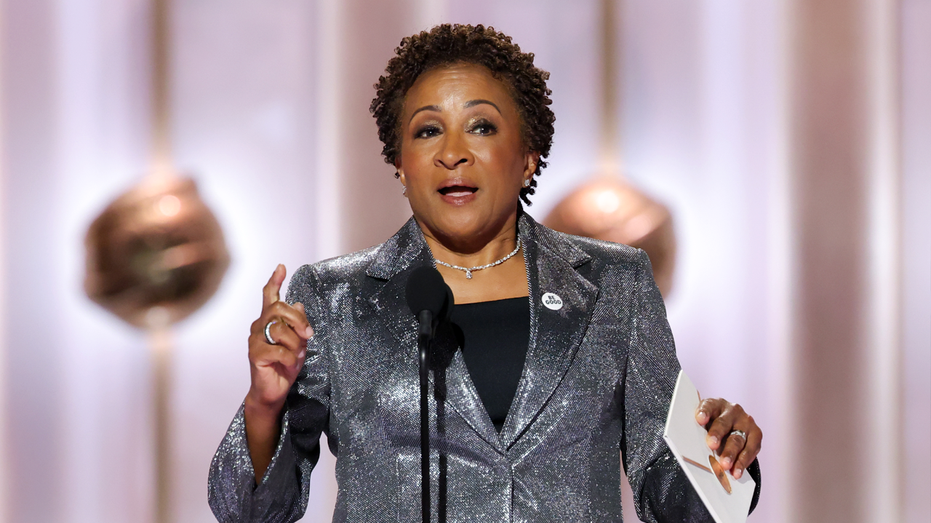
Comedian Wanda Sykes argues that modern comics are terrified of critics for saying wrong jokes
Wanda Sykes says many comedians are scared to tell certain jokes but argues it is important to say them anyway, even if it means a smaller audience.
Comedian Wanda Sykes said in a Monday interview that many comedians are scared to tell certain jokes out of fear, but argued it is important to say them anyway.
Charlamagne tha God and the rest of the "Breakfast Club" radio show hosts interviewed Sykes and recalled her prolific career in comedy. Sykes got her big break writing for The Chris Rock Show, where she won an Emmy in 1999, then went on to have a stellar career in stand-up as well as recurring guest roles on comedic shows like Curb Your Enthusiasm. She also hosted the White House Correspondents’ Dinner in 2009 and was named one of the "25 Funniest People in America" by Entertainment Weekly.
"The thing I used to love about the Chris Rock Show—it was just full of uncomfortable truths," Charlamagne recalled. "Even that whole era was full of uncomfortable truths, right? Do you think comedy is still allowed to be that honest? Or are we in an era now where everybody wants jokes, but they don't want the truth that comes [with it]?"
"No. You know what? I think you're allowed to do it, but it's just who wants to do it? You know what I'm saying?" Sykes replied, who has not shied away from political hot takes herself. "If I’m trying to fill an arena, you know what I’m saying, you can't be that common. You got to be you got to appeal to the masses. And sometimes, right now, what the masses want to hear, it's ugly, you know."
MARLON WAYANS DECLARES WAR ON CANCEL CULTURE WITH PROVOCATIVE 'SCARY MOVIE 6' TRAILER RELEASE
"I’m glad you said that. I’m [going to] do it," Jess Hilarious, a standup comedian herself, replied, "But when I do me, when I do funny, people be getting mad."
"Who gives a ----? You can’t do it for them. You got to do it for you. You got to say what you want. And hey, if what I want to say and what makes me feel, you know, good about my gift that I have, if I'm only going to get maybe 600 people, then those are the 600 people that that, you know, you're supposed to be speaking to."
"But do people get offended too fast?" co-host DJ Envy asked. "Where it's like, you know, back then jokes just flew. It didn't matter. You made fun of everybody. It could be the crippled person. It could be to this person. It doesn't matter. People laugh. Now it doesn't seem like they laugh. They look for a reason to say, ‘You know what? We're going to boycott your next show.’"
Sykes argued that many people like to play the critic or moral police, but they often fail to understand where the comedian is coming from, willfully misinterpreting them in the worst possible way.
"A lot of people like to be the critic. They want to be the police," Sykes said. "It's like if you say something and it might offend you, but you got to look at where that person is coming from. You know? Maybe their life, their perspective is different from what you know – ‘Yeah, you're offended, but you're not standing in my shoes. You don't see it from my perspective!’ - So, I think that's what we've gotten away from."
VINCE VAUGHN CALLS OUT LATE-NIGHT SHOWS ALL FEELING 'THE SAME,' BECOMING 'AGENDA-BASED' SCOLDING
Another co-host asked whether she has discerned a fine line on the issue of punching up versus punching down, which essentially is the dynamic where people discern whether it is socially acceptable to make fun of a person or group by assessing whether they are high status or low status.
"I always try to punch up because I feel like - but that’s me," Sykes said, noting she herself is a Black woman and gay. Nonetheless, she said, "If you punch down, if it’s funny, I’m going to laugh."
The difference, she argued, is whether a joke that is punching down comes from a place of love/familiarity or from genuine malice toward a person or group, citing a famous joke from Chris Rock about certain men in the Black community.