International News Portal27 November 2026Headlines from established publishers
World
Giant golden spiders could spread this summer, experts downplay health risk
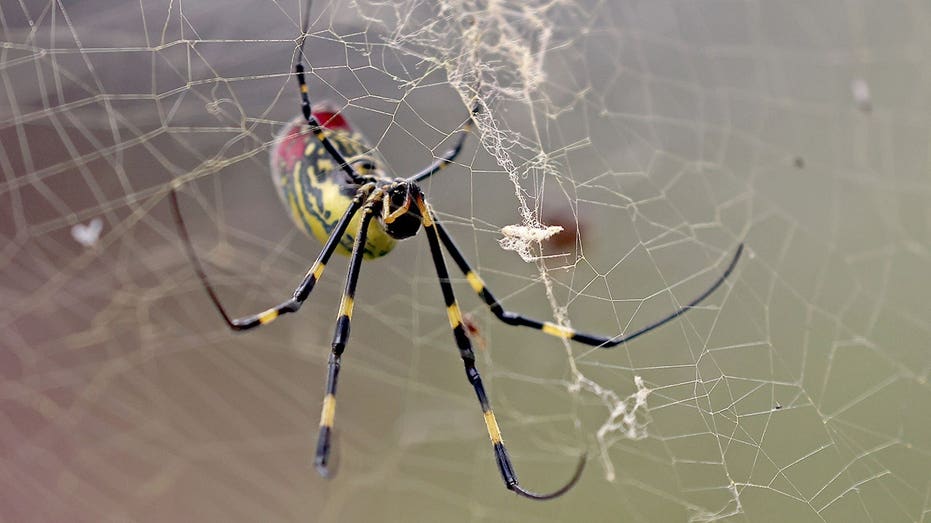
Joro spiders, which have 4-inch leg spans, are spreading across the eastern U.S., and Penn State says they could reach Pennsylvania. Experts say not to panic, as they're shy and rarely bite.
Large, palm-sized spiders are spinning massive golden webs across porches and power lines – and according to experts, they’re here to stay.
The Joro spider, which has a leg span up to 4 inches and markings of neon yellow, blue-black and red, was first recorded in Georgia in 2013.
Since its arrival – likely as a hitchhiker on a shipping container or an airplane from Asia, experts say – the arachnid has been steadily marching north.
The spiders have so far been spotted in Georgia, North Carolina, South Carolina and Tennessee.
They are expected to spread throughout eastern North America – at least as far north as Pennsylvania and possibly further in warmer, coastal areas, according to Penn State.
To travel, the spider uses a technique called "ballooning," in which hatchlings release fine silk threads that catch air currents and carry them over long distances.
Ian Williams, an entomologist with Orkin, said he counted 200 adult spiders by September of last year on his one-acre property near Atlanta.
"They're quite intimidating-looking spiders, and they make very large webs," he told Fox News Digital. "The webbing itself, if it catches the sunlight, has a golden hue to it. And it's very strong."
Despite the arachnid's striking appearance, experts agree that people shouldn't panic. Research shows the Joro is among the "shyest" spiders ever documented. When disturbed, it often sits motionless for over an hour rather than attacking.
"While they're large spiders, they don't have large fangs. And so, it's difficult for them to bite humans," Williams noted.
Even in the rare event of a nip, the expert said the venom is weak, comparable to a localized bee sting, and carries "no medical importance."
As an invasive species, the Joro’s impact is still being weighed by scientists.
"One of the big concerns is that they potentially out-compete native species of spiders," Williams said.
A prolific hunter, the Joro spider catches everything from mosquitoes to large, meaty insects like cicadas. It is unclear whether it steals food from native garden spiders.
To prevent Joro spiders from nesting on your porch or property, experts recommend using a broom or long pole to knock the web down.
Physical removal is more effective than pesticides, which often miss the spiders in their high, open-air webs.
For those who spot a Joro spider in a new area, experts suggest logging the sighting on apps like iNaturalist to help researchers track their northern migration.
We use cookies to run this site and, with your consent, to measure
traffic and improve our content. Necessary cookies are always on. You
can accept all cookies or choose which ones to allow.
Privacy policy.