


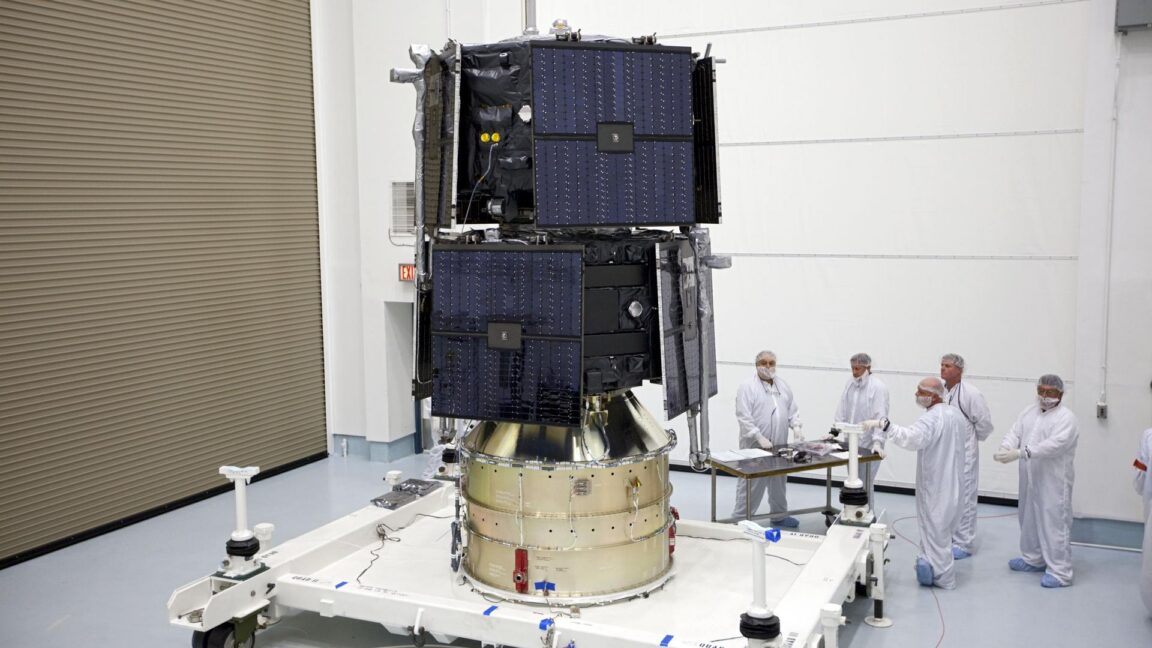
NASA approved a safety waiver for this week's reentry of Van Allen Probe
"Due to late-stage design changes, the potential risk of uncontrolled reentry increased."
A NASA satellite that spent more than a decade coursing through the Van Allen radiation belts encircling Earth is about to fall back into the atmosphere.
Most of the spacecraft will burn up during reentry, but a fraction of the material making up the 1,323-pound (600-kilogram) satellite will likely reach Earth's surface without vaporizing in the atmosphere. Uncontrolled reentries of satellites with comparable mass happen quite regularly—multiple times per month, according to one recent study—but most of them are older spacecraft or spent rocket bodies.
This reentry is notable because it poses a higher risk to the public than the US government typically allows. The risk of harm coming to anyone on Earth is still low, approximately 1 in 4,200, but it exceeds the government standard of a 1 in 10,000 chance of an uncontrolled reentry causing a casualty.