Why are vertebrate eyes so different from those of other animals?
A new hypothesis proposes that our ancestors lost their eyes, then rebuilt them.
A new hypothesis proposes that our ancestors lost their eyes, then rebuilt them.
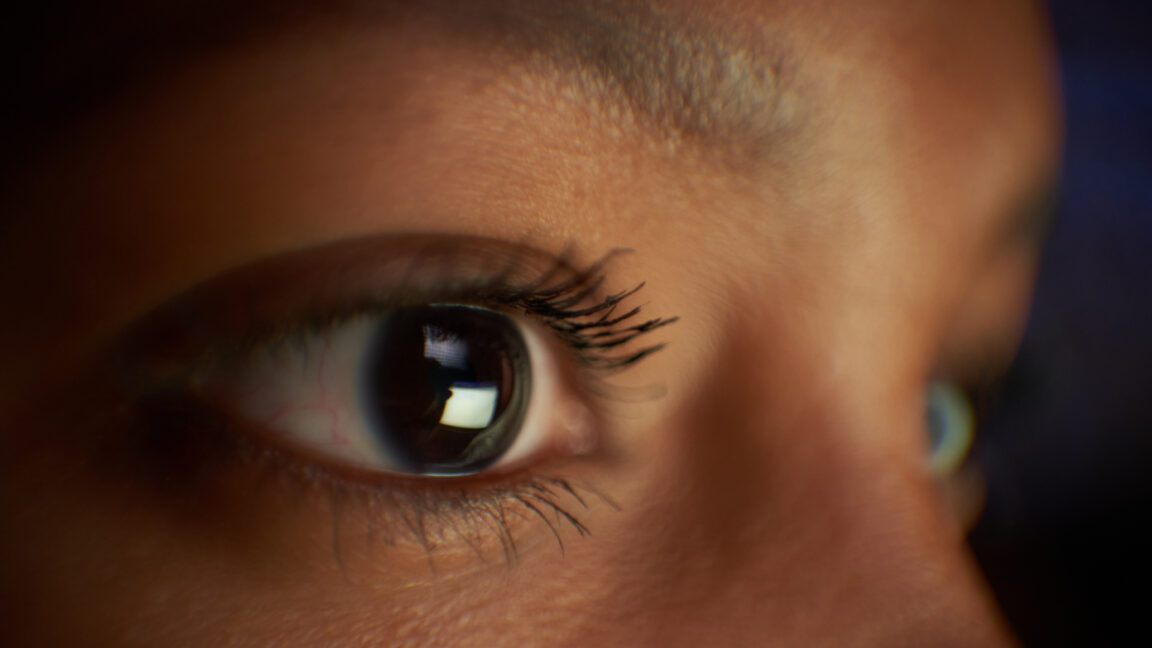
After losing its original eyes, one of our distant ancestors may have done what evolution does best: tinkered with what was available, reshaping a single central visual organ into two new eyes.
That's the idea behind a new theoretical synthesis published in Current Biology. According to the data considered by its authors—a team from the University of Sussex (UK) and Lund University (Sweden)—vertebrate eyes, ours included, may not descend directly from the paired eyes of early bilaterian animals. Instead, they may have been “reinvented” from what was once a single light-sensitive organ that survived an evolutionary detour.
“Vertebrate eyes are so fundamentally different from the lateral eyes of other animal groups,” explains Dan-Eric Nilsson, senior author of the study from Lund University and a leading expert in eye evolution. “The key difference is the identity of the main photoreceptor, which is of ciliary nature in the vertebrate eye but rhabdomeric in other animal groups, such as arthropods and cephalopods,” he adds.
This story was first published by Ars Technica. Read the original report
We use cookies to run this site and, with your consent, to measure traffic and improve our content. Necessary cookies are always on. You can accept all cookies or choose which ones to allow. Privacy policy.