
Fender Elie review: Handsome speaker/amp hybrids with excellent clarity
A new company needs to make a strong first impression. For Fender Audio, a new outfit owned by the legendary Fender Musical Instruments Corporation but operated by Riffsound, that introduction comes in the form of two speakers and a set of headphones. The Elie 6 ($300) and Elie 12 ($400) are portabl...
A new company needs to make a strong first impression. For Fender Audio, a new outfit owned by the legendary Fender Musical Instruments Corporation but operated by Riffsound, that introduction comes in the form of two speakers and a set of headphones. The Elie 6 ($300) and Elie 12 ($400) are portable Bluetooth speakers with sophisticated designs and unique features, offering similar functionality in two different sizes. These devices are essentially speaker/amplifier hybrids, since they both have ¼-inch/XLR combo inputs among their connections. Despite the unique mix of connectivity, the speakers still need to sound good and work well to compete with the many excellent portable options available today.
The good: Design, inputs and overall clarity
The first time I saw the Elie 6 and Elie 12 in person, my eyes were immediately drawn to the design. These certainly don’t look like your typical Bluetooth speakers. That’s due in large part to the refined, almost retro look that’s consistent across both models. The Elie duo are products you won’t mind showing off, while many portable speakers are too flashy or brightly colored to be kept in a prominent place.
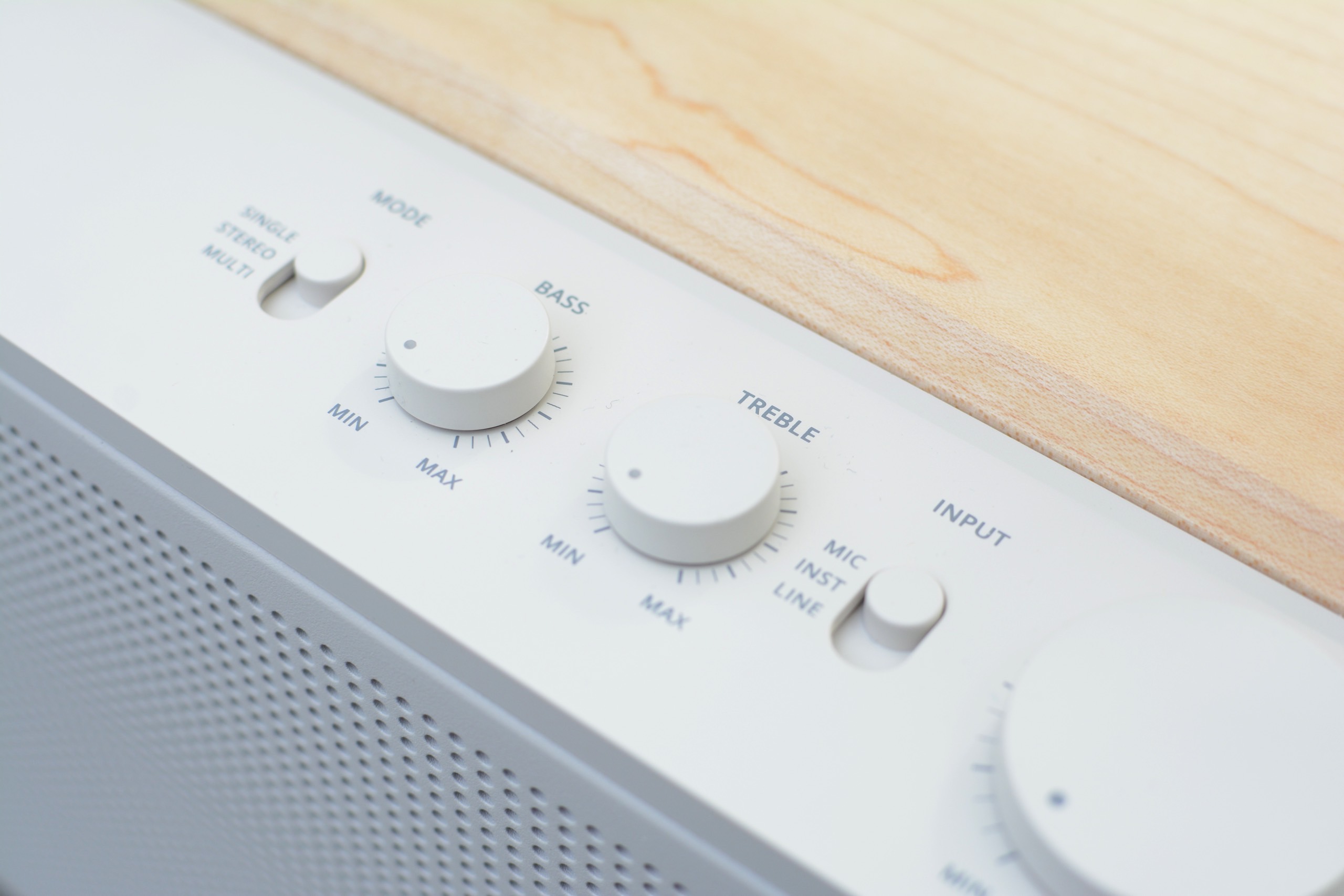
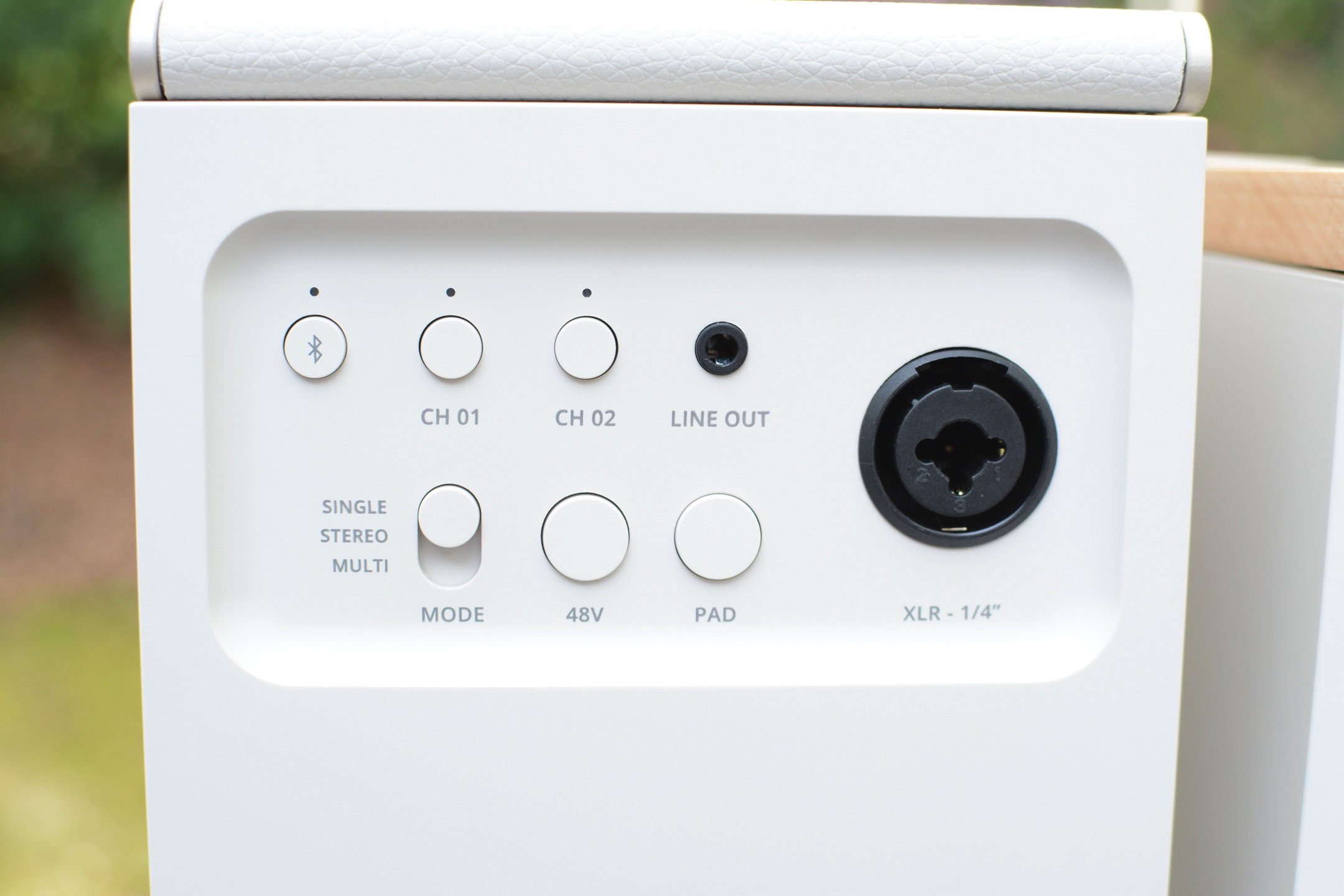
All of the onboard controls are clearly labeled physical buttons or dials, so you’re not left wondering how anything works. Around back, both the Elie 6 and Elie 12 have combo ¼-inch/XLR inputs (with 48V phantom power) as well as buttons for two wireless inputs and a 3.5mm line out. That combo jack means both speakers can double as amps, and the dual wireless connections allow you to sync microphones for karaoke sessions or hosting trivia night. This expanded functionality speaks to Fender’s history as a guitar icon, but it also gives the Elie speakers an upper hand over much of the competition at these sizes. Typically if you want these types of inputs, you’ll need to consider a much larger party box-style speaker to get them.
Before I move on from the controls and inputs, I need to mention the dedicated three-way mode switch for single, stereo and multi-speaker uses. This is so much easier than what’s on most portable speakers, which usually entails some weird dance with Bluetooth pairing or an app to sync multiple units together. Enlisting a physical switch so you know exactly where things stand is a much better and faster experience.
In terms of sound, the best thing the Elie 6 and Elie 12 speakers have going for them is their overall clarity. The crisp, clear quality gives these Fender Audio units an advantage over the competition at these sizes. Throughout a range of genres — including bluegrass, alt-rock and heavy metal — both the Elie 6 and Elie 12 handled the varied styles with ease. The Elie 12 has twice the speakers as the Elie 6 (two full range, two tweeters and two subwoofers) and double the power output at 120 watts. So, of course, there’s more volume and bassy oomph on the larger speaker.
Both the Elie 6 and Elie 12 have a wider soundstage than many speakers of similar sizes. You can really hear this on American Football’s debut album, where the guitars ring clear, interlaced with drums while the vocals float on top. All of the elements stand on their own, but are seamlessly blended throughout every track. The Elie 12 features more bass and volume, but the overall sound quality, and importantly, clarity, is pretty similar for both speakers. I did notice more instrumental separation on the larger model though, so the album is a bit more immersive there.
The not so great: Controls, no app and battery life
While I appreciate the physical controls on the Elie 6 and Elie 12, the playback options are limited, which means you’ll be reaching for your phone often. There’s only a play/pause button on both speakers, and no controls for skipping tracks. And no, you can’t skip forwards or backwards with a double or triple press on the play/pause button. Plus, only the Elie 12 has bass and treble dials, so there’s currently no option for adjusting the sound on the Elie 6.
That’s because Fender Audio is still working on an app for its speakers and headphones. The lack of customization was an issue for me on the Mix headphones, and it continues to be one here. Customers need access to features and settings on devices like this, even if a company decides to offer audio presets instead of a full EQ. Some type of visual interface would also help when you’re using a few of those inputs at once. A basic mult-channel mixer maybe? Hey, a boy can dream.
Going back to the controls, the volume dials on both speakers could use refining. First, a listenable volume doesn’t happen until halfway. Anything below that and that excellent clarity isn’t present, and you can’t really hear the content well at all. There’s plenty of power at 50 percent and above, so that’s not a concern, but the control needs to be recalibrated for more even increases. What’s more, adjustments are slightly delayed: when you turn the dial, it takes a second or two for the speaker to catch up. To me, it feels like that should be instantaneous.
When it’s time to venture outdoors, both the Elie 6 and Elie 12 are IP54 rated for dust and water splashes. However, both speakers have a wood panel on top, which certainly won’t withstand much moisture. As such, I find the IP ratings confusing, since it’s obvious the entirety of the designs aren’t up to that task. If you’re careful about water though, both speakers have enough volume for open-air use.
One other consideration for the Elie 6 and 12 is their weight. The smaller speaker weighs just over five pounds, while the larger model is a whopping 8.8 pounds. For comparison, the Sonos Play is just 2.87 pounds and JBL’s Xtreme 4 tips the scales at 4.63 pounds. This means the Elie 6 and 12 are portable options, but they aren’t the grab-and-go type of speakers some of the competition offers — especially when weight matters.
Battery life is one other area the Elie 6 and Elie 12 fall behind some of their competition. The smaller Elie 6 offers 15 hours of use while the larger Elie 12 should last up to 18 hours. That sounds like more than enough since it's longer than a full day, right? Well, JBL Bluetooth speakers at comparable prices last 24 and 34 hours. The new Sonos Play is rated at 24 hours, and one of my personal favorites, the Bose SoundLink Max, lasts up to 20 hours.
Wrap-up
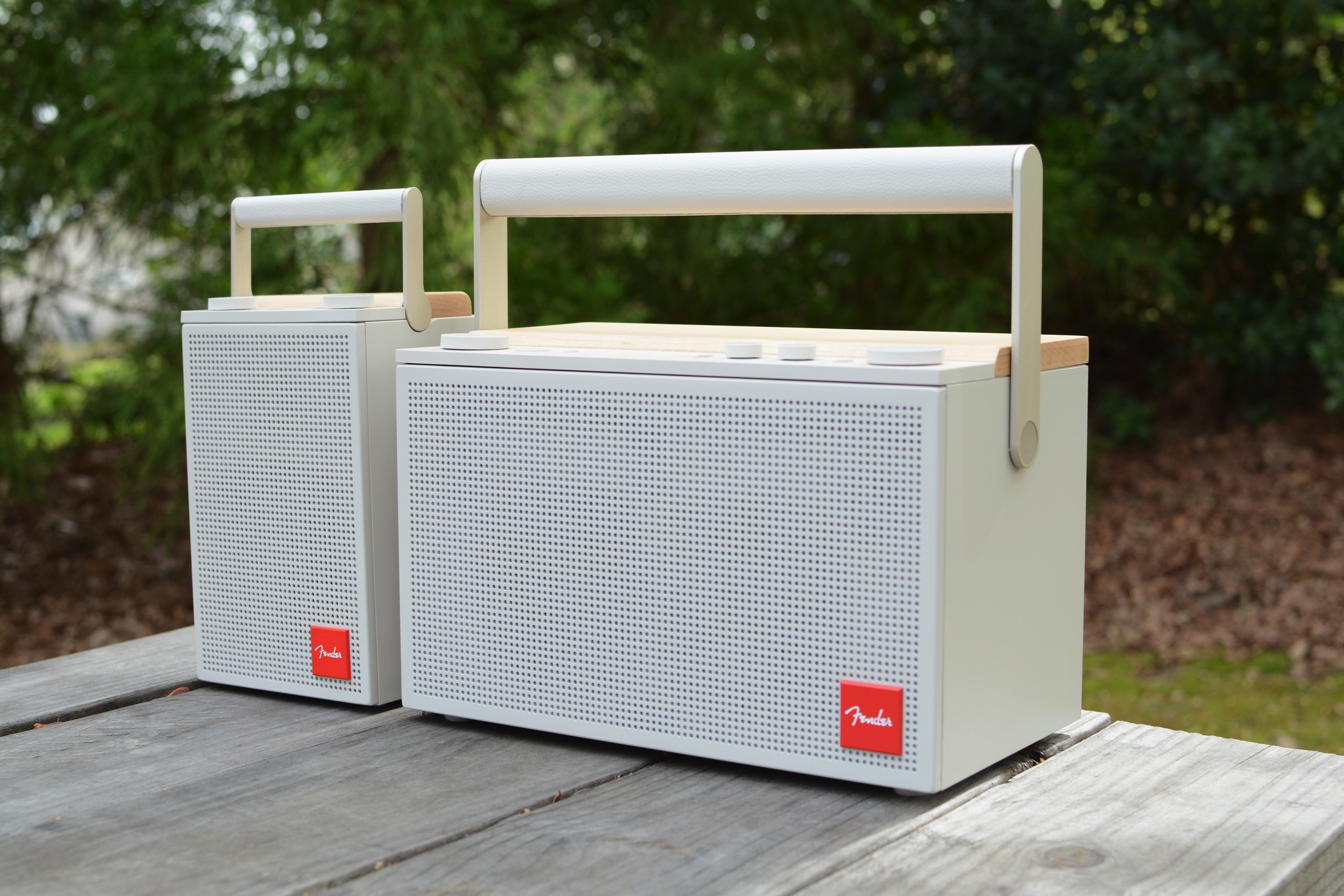
There’s no doubt Fender Audio built two versatile, great-looking speakers here. Both the Elie 6 and Elie 12 are capable devices, and you don’t have to sacrifice much if you opt for the smaller of the two. The unique collection of inputs is typically only available on much larger speakers and the overall sound quality is well-suited for a range of genres.
Speakers like these really need an app though, especially when a company offers four inputs to juggle. I’m sure would-be customers would also like to dial in the EQ to their preferences, too. Sure, you can find longer battery life elsewhere, but the blend of design, sound and connectivity stands out at these prices. I’d call that a solid first impression.
This article originally appeared on Engadget at https://www.engadget.com/audio/speakers/fender-elie-review-handsome-speakeramp-hybrids-with-excellent-clarity-123000448.html?src=rss