Trump’s Iran ceasefire rocked within hours amid reported missile, drone attacks
Trump announced a ceasefire with Iran, but reported drone attacks on Gulf states and Strait of Hormuz tensions signal the deal may already be strained.
In a rapid turn Tuesday night, President Donald Trump announced a ceasefire with Iran just hours after warning the regime would face devastating consequences.
But within hours of the agreement, Gulf states already were reporting drone attacks and officials signaled the agreement may already be under strain.
The two-week ceasefire, brokered with help from Pakistan, was framed by the White House as a step toward broader negotiations, and defense officials said U.S. strikes on Iran had halted following Trump’s announcement Tuesday night.
But within hours, Israel launched its largest strike yet on Hezbollah in Lebanon — which is not covered by the ceasefire — and Iranian state media signaled Tehran could again restrict access to the Strait of Hormuz as fighting in Lebanon continues.
GEN JACK KEANE 'SKEPTICAL' THAT IRAN CEASEFIRE WILL HOLD, WARNS TEHRAN WILL 'DELAY AND OBFUSCATE'
"The Iran–U.S. Ceasefire terms are clear and explicit: the U.S. must choose—ceasefire or continued war via Israel. It cannot have both," Iranian foreign minister Abbas Araghchi said in a statement posted to X. "The world sees the massacres in Lebanon. The ball is in the U.S. court, and the world is watching whether it will act on its commitments."
Saudi Arabia said it intercepted and destroyed nine drones in recent hours, while the United Arab Emirates reported intercepting 17 ballistic missiles and 35 drones. Kuwait’s military said it intercepted 42 drones and four ballistic missiles launched since early Wednesday, some targeting oil facilities, power stations and other critical infrastructure.
Bahrain also reported injuries and damage after debris from an intercepted Iranian drone fell in a residential area.
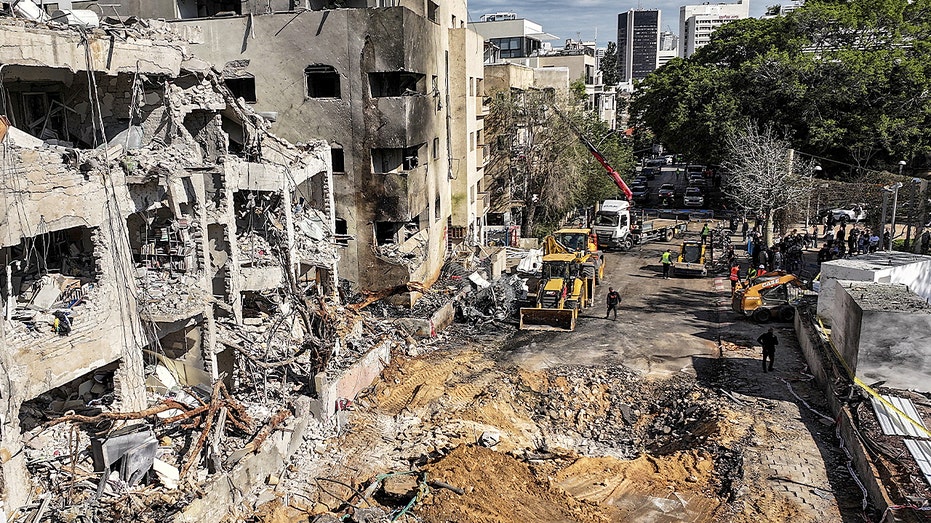
The regional attacks came after Iran launched missile barrages toward Israel in the hours surrounding the ceasefire announcement Tuesday night, triggering sirens across major cities including Tel Aviv and Jerusalem. An Israeli Defense Forces spokesperson told Fox News Digital that there were launches toward Israel from Iran after the ceasefire took effect.
"This is a fragile truce," press secretary Karoline Leavitt told reporters Wednesday when asked about reported violations at a White House press briefing. "Ceasefires are fragile by nature. We've seen this with respect to the 12-day war with Iran in Israel last year. It takes time sometimes for these ceasefires to be fully effectuated."
Pakistani Prime Minister Shehbaz Sharif, who helped mediate the ceasefire, said Wednesday "violations of ceasefire have been reported at few places," urging all sides to exercise restraint and preserve the agreement.
"It takes time sometimes for ceasefires to take hold," War Secretary Pete Hegseth cautioned in a news conference Wednesday morning. "We’re prepared if necessary, but we hope and believe it will hold."
He said the Pentagon was monitoring attacks that happened Tuesday night "in real time."
"Iran would be wise to find a way to get the carrier pigeon to their troops out in remote locations, not to shoot any longer, one way attacks or missiles," he said.
U.S. Central Command declined to say whether any Iranian activity has continued since the ceasefire took effect, offering no additional details beyond remarks from War Department leadership earlier Wednesday.
Trump said he agreed to pause strikes on Iran on the condition of "complete, immediate, and safe" reopening of the Strait of Hormuz, citing progress in longer-term negotiations.
But the Iranian navy told ships anchored near the key global shipping route Wednesday they still need Iran’s permission to pass, according to the Wall Street Journal.
"The president was made aware of those reports before I came to the podium," Leavitt told reporters Wednesday. "That is completely unacceptable. And again, this is a case of what they're saying publicly is different. Privately, we have seen an uptick of traffic in the Strait today. And I will reiterate the president's expectation and demand that the Strait of Hormuz is reopened immediately."
Trump suggested Wednesday to ABC that both Iran and the U.S. may collect tolls from the Strait in a "joint venture," though details remain unclear.
Vice President JD Vance, White House envoys Steve Witkoff and Jared Kushner will head Pakistan for the first round of peace talks with Iran on Saturday, the White House said. Any discussions could be complicated by reports of continued attacks across the region.
The White House did not respond to a request for comment.