Australian Aboriginals cared for a dingo's grave for decades
For some ancient Aboriginal Australian communities, dingoes were part of the family.
For some ancient Aboriginal Australian communities, dingoes were part of the family.
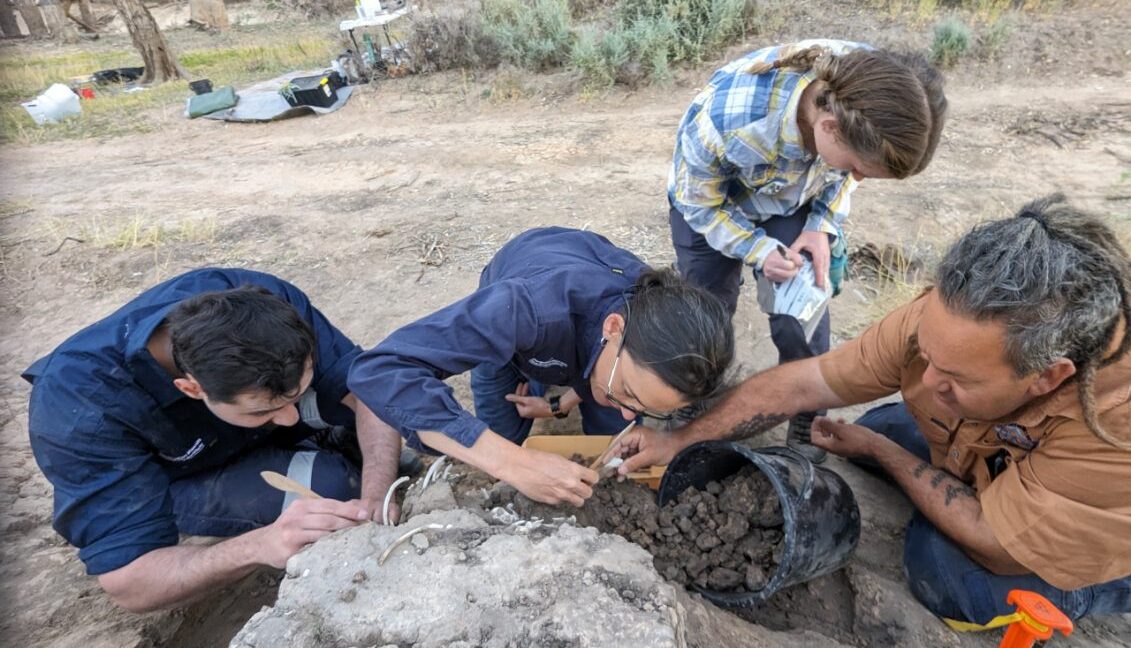
A thousand years ago, the ancestors of today's Barkindji people carefully buried a dingo (or garli, in the Barkindji language) in a mound of shells.
Archaeologists recently studied the burial in what's now New South Wales, Australia. They found that the Barkindji ancestors had buried the dingo with the same care and ceremony as any beloved human member of the community and looked after the grave for centuries. The burial reveals that dingoes were, as Australian Museum and University of Sydney archaeologist and study co-author Amy Way puts it, “deeply valued and loved” by ancient people in Australia.
Five years ago, Barkindji Elder Uncle Badger Bates and National Parks and Wildlife Service archaeologist Dan Witter saw bones eroding out of a road cut in Kinchega National Park, an area along the Baaka, or Darling River, in Western Australia. Badger recognized the bones as a dingo, lying on its left side in what was once a carefully built mound of river mussel shells.
This story was first published by Ars Technica. Read the original report
We use cookies to run this site and, with your consent, to measure traffic and improve our content. Necessary cookies are always on. You can accept all cookies or choose which ones to allow. Privacy policy.