


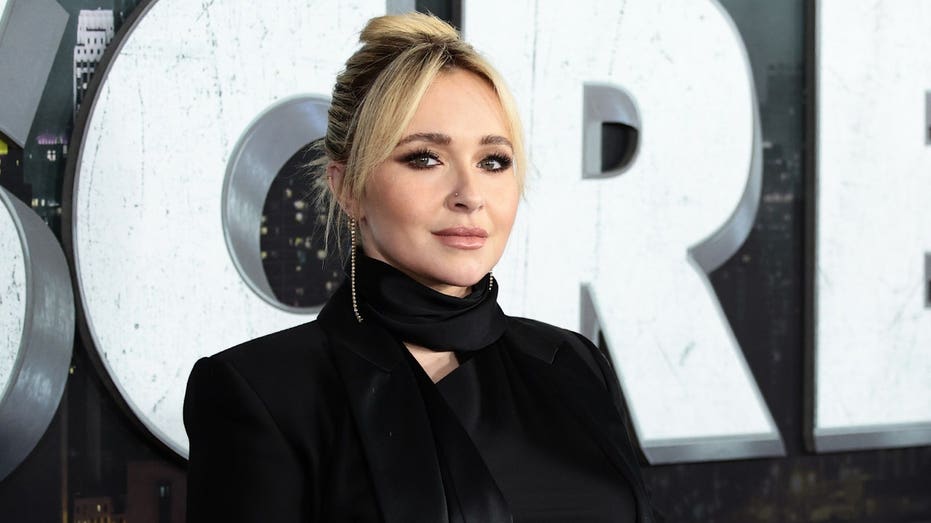
Hayden Panettiere says filming ‘Nashville’ was like living through addiction twice
Hayden Panettiere opens up in her memoir about battling addiction and postpartum depression while filming "Nashville," saying she lived her hell twice.
Hayden Panettiere is opening up about what it was like filming a hit series which mirrored her real life.
In her recent memoir, "This Is Me: A Reckoning," the 36-year-old actress discussed how she felt filming the hit show "Nashville" while in a dark place in her life, and having to act out her personal struggles on television.
"During the better part of season four, my personal problems were writing the script. Juliette Barnes had postpartum depression, an alcohol and pill problem, and a divorce on the horizon. She was erratic, an absentee mother, and fought with everyone — including her fans," she explained.
She continued: "Every time I read the day's script, it was like I was looking in a funhouse mirror, seeing a distorted reflection of myself. I can't tell you how lost this made me feel."
JENNETTE MCCURDY ADMITS HOLLYWOOD REWARDS DISHONESTY, CALLS INDUSTRY ‘HORRIFYING’
Panettiere shared that in the past she was able to "draw a line between my character and myself" when filming her other projects, noting that she no longer had "another world that was distinct from my own" to escape into while at work.
"I dove headfirst into my own hell," she wrote. "I was suffering from debilitating anxiety and an addiction I couldn't shake, and I had to live through it twice. First at home as Hayden, and then in front of millions, as Juliette."
When speaking about her addiction, Panettiere recalled the moment she realized she needed to seek treatment, in between filming season three and four of "Nashville."
She wrote that her house was stocked with three-ounce bottles of Fireball, which she explained gave her "instant relief," noting "the second I felt that burn, the anxiety was gone." Panettiere knew she needed to seek help when she found herself searching her home for bottles of Fireball at 6:00 AM, coming to the realization that she was trying to get drunk so early in the morning.
"The first thing I'd thought of when I woke up was alcohol. Not my child, not my job, and not the rest of my life. I needed a drink to function — at 6:00 a.m. — and that was f---ed. If I didn't get some help as soon as possible, I was f---ed."
Panettiere left the rehab center with a diagnosis of postpartum depression and a prescription for Klonopin to help with her anxiety, writing, "I'd walked into rehab addicted to one substance, and I'd walked out, completely dependent on something else."
LISA RINNA THREATENED TO KILL HUSBAND HARRY HAMLIN DUE TO 'HORRIBLE' POSTPARTUM DEPRESSION
After a scary experience related to the Klonopin which left her in the hospital, the actress chose to stop taking it, saying she "switched to vodka, thinking no one could smell it on my breath."
"But I was fooling myself," she said. "Vodka smells like vodka. I'm sure everyone knew what was going on, but no one said anything. When you're an actor managed by a team who depends on you, people prop you up out of allegiance, blind trust, or fear of getting fired. Some call that support, but at times, I've called it enabling."
CLICK HERE TO SIGN UP FOR THE ENTERTAINMENT NEWSLETTER
The "Bring It On: All or Nothing" star shared with The New York Times in 2023 that she had been sober for two years, after seeking treatment in 2020 and 2021.
Looking back on her addiction, the actress was able to pinpoint the moment she first tried drugs, sharing a rep pulled her aside when she was doing press for "Heroes" at 16 years old and handed her a pill, telling her "take one of these...it's a happy pill."
She recalled taking the pill because she trusted those around her, and instantly feeling "a wave of energy" come over her, adding she felt like "a brand new Hayden." The actress writes that after a while she began asking her rep for the pill before every interview, without even knowing what they were, adding, "I didn't care."
"The happy pills had opened a door for me to feel more focused, energized, and alive," she wrote. "When I took my pills, rubbed my eyes, and could see clearly, the world was better. I was better."
LIKE WHAT YOU’RE READING? CLICK HERE FOR MORE ENTERTAINMENT NEWS
"At sixteen, they were the gateway drug that ushered me toward the good of pharmaceuticals and the downfall of addiction," she added. "They showed me how drugs can change your brain for better or for worse. They opened up my world, but years later, they'd forever change it as well."