


WNBA graphic omitting Caitlin Clark shows identity politics still come first | Bobby Burack
OutKick argues the WNBA once again snubbed Caitlin Clark from a promotional graphic, choosing a player averaging 1.0 points per game over its biggest star.
Before the start of the WNBA season, OutKick argued that the league was in position to establish itself as a viable mainstream attraction. But to do that, the league needed to embrace Caitlin Clark as the transcendent, once-in-a-generation superstar she is.
It turns out the WNBA still isn't ready to do that.
On Sunday, the league posted a social media graphic promoting its doubleheader on NBC/Peacock. The graphic featured A’ja Wilson of the Aces, Angel Reese of the Dream, Zia Cooke of the Storm, and, representing the Fever, Raven Johnson.
That's right. Raven Johnson, who is averaging 1.0 points per game this season.
Johnson is also Black. While we normally wouldn't mention her skin color, it likely played a role in the decision to feature her over Clark. We can't think of another reason the league would do so.
If the WNBA's goal was to spotlight newer or lesser-known players, we could at least understand the logic. But that clearly wasn't the case, considering the graphic also included established stars like Wilson and Reese.
Had the league also promoted Isobel Borlase, who averages 1.0 points per game, over Reese, we might have given it the benefit of the doubt.
READ MORE OF BOBBY BURACK'S COLUMNS HERE
This omission of Clark is hardly a new development. Throughout Clark's first two seasons in the league, the WNBA repeatedly excluded her from promos, commercials and graphics.
Imagine the NBA promoting a Bulls game in the 1990s without Michael Jordan. Imagine the league previewing a new season today without LeBron James. If you can find a single ad for the upcoming Texas Longhorns season that doesn't feature Arch Manning, let us know.
Every sport's league promotes its biggest stars. It would be foolish not to. Well, every league except the WNBA.
There remains deep sensitivity around Caitlin Clark's popularity because people in and around the sport insist it exists only because she is a straight White woman from Iowa. ESPN pundits continue to insist that's the reason, despite overwhelming evidence to the contrary. As a result, people around the league — apparently, including its social media team — seem determined to prove they are either not racist (if White) or not a sellout (if Black).
DOUBLE STANDARD: IT'S ONLY A CONTROVERSY WHEN CAITLIN CLARK WALKS OUT WITH MORGAN WALLEN
Racial tensions surrounding Clark are especially high right now, after a group of racially idolatrous media members fumed outrage over her walking out with Morgan Wallen at his concert last weekend.
For context, there was no backlash when Patrick Mahomes, Myles Garrett and Marshawn Lynch appeared with Wallen. But when the White girl did it, suddenly it became a controversy.
An ESPN guest writer named Jayson Buford accused Clark on Substack of appealing to a "scary" form of "whiteness," whatever that means, by walking out with Wallen.
"Caitlin Clark is beloved by most people despite her proximity to the type of whiteness that is inherently scary," Buford wrote. "So why did she walk out with Morgan Wallen? It's so blatantly corny."
Like the social media team, Buford signaled his virtue. No one can accuse him of being a sellout.
Meanwhile, the WNBA once again looks bush league, petty and toxic. Burying your biggest star because she is white — and because some people within the league resent that reality — is not just unappealing. It's racist. It sends the message that the WNBA is more concerned with identity politics than appealing to fans.
By now, the playbook is painfully predictable. The WNBA undermines Clark. Her fans notice. And then, her detractors accuse those fans of racism for noticing. Rinse and repeat.
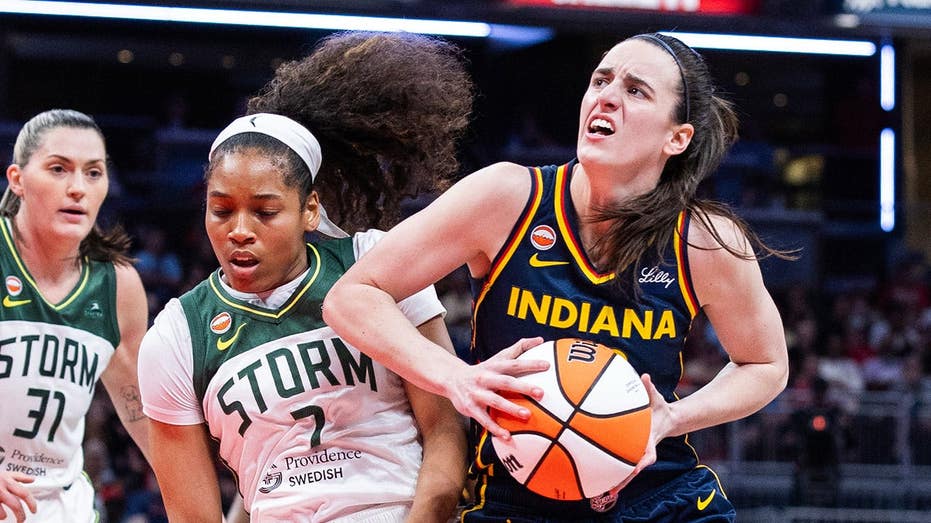
Finally, Clark finished Sunday's game with 21 points, 10 assists and 7 rebounds, leading the Fever to an 89-78 win over the Storm. Raven Johnson, who made the graphic over Clark, didn't score a single point.
And that's why the WNBA remains a small-time sports league subject to mockery, despite employing arguably the most popular basketball player in the world.