


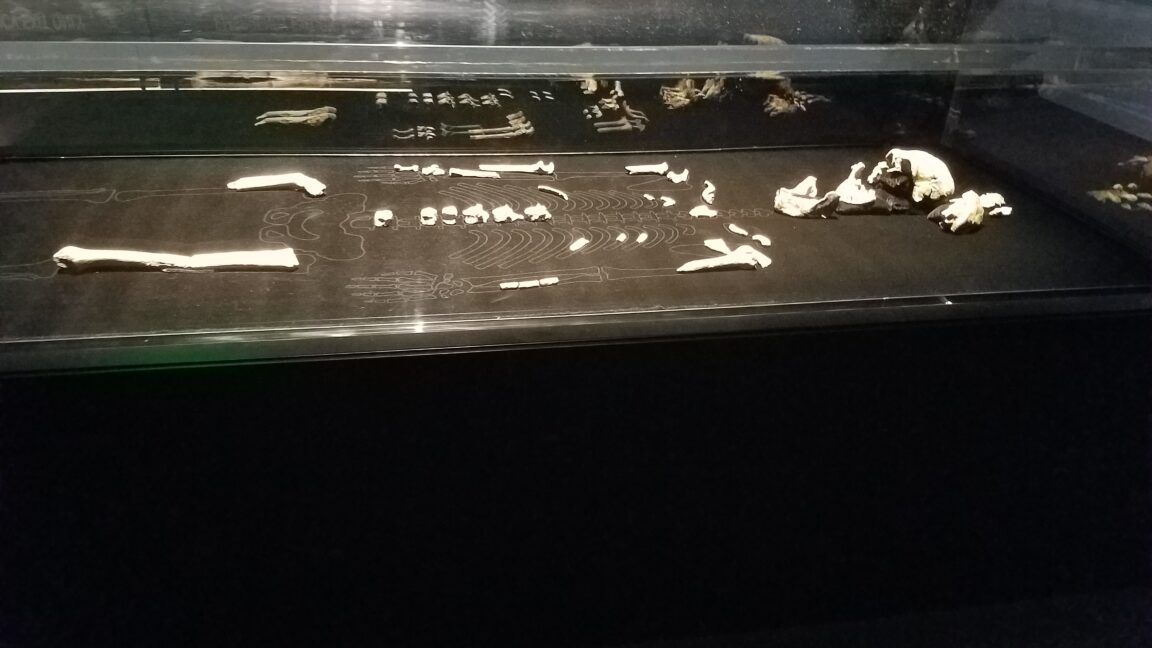
Every Homo naledi we know of is female, and the implications are fascinating
"There is no natural explanation," says paleoanthropologist John Hawks.
All the Homo naledi skeletons in Rising Star Cave are female, and that probably didn’t happen by accident.
In 2013, a team of anthropologists led by Lee Berger unearthed the remains of more than 20 small-bodied hominins (ancient relatives of humans), all 335,000 to 236,000 years old, from the Rising Star Cave System in South Africa. Excavations at Rising Star have sparked debate about whether these little hominins had all ended up in the caves by tragic accident, or whether they’d been carefully placed there by other members of their enigmatic species, dubbed Homo naledi.
Now there's a plot twist that may speak to how the remains got there: All of the hominins in Rising Star are female, at least according to the proteins in their dental enamel.