International News Portal9 November 2026Headlines from established publishers
World
Helmet-style cockpit vision system aims to change how pilots see in low visibility
FAA-certified for Boeing 737 Next Generation aircraft, AerAware combines enhanced vision technology and wearable displays as airlines evaluate new tools to support operations in low-visibility conditions.
Dror Yahav, a former commercial pilot and now CEO of Universal Avionics, said he often flew approaches in low-visibility conditions where runways did not appear until late in the landing sequence. Now, he's helping bring a cockpit vision system to market for commercial aircraft.
AerSale developed the system, AerAware, in partnership with Universal Avionics and has received Federal Aviation Administration certification for the Boeing 737 Next Generation.
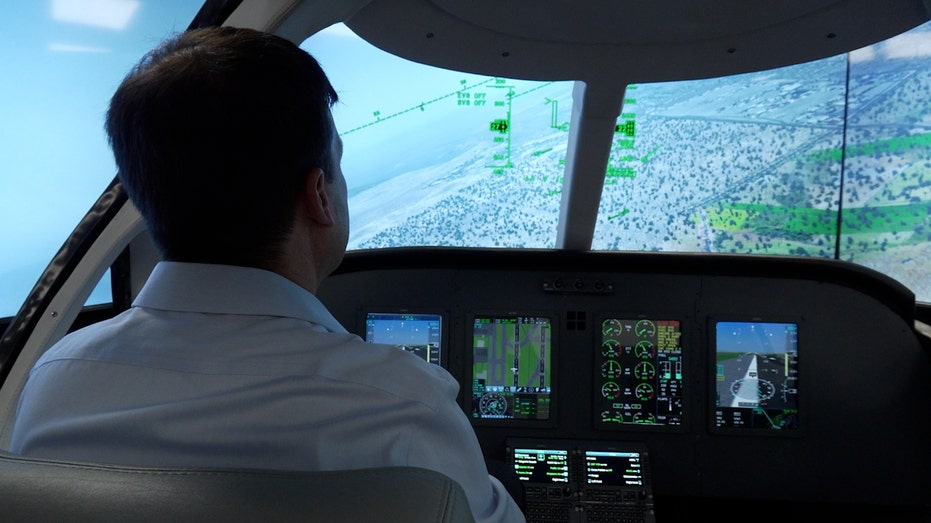
The system uses a nose-mounted enhanced vision camera and a wearable head display that overlays flight data and imagery into the pilot’s field of view.
Yahav said the system reflects his experience with low-visibility night approaches.
"You turn your head up and look outside, and there’s just nothing — pitch black or foggy," he said.
He said the system combines sensor data and imagery to support situational awareness during takeoff and landing.
AerAware departs from traditional head-up displays and instead equips both pilots with a dual wearable system that delivers the same information to each cockpit seat.
Yahav said the concept draws from military helmet-mounted displays used in aircraft such as the F-35 Lightning II.
Regulators continue to focus on runway safety, and FAA data shows there were 1,636 runway incursions in fiscal year 2025, down from 1,758 in 2024 and 1,760 in 2023. Pilot deviations accounted for 62% of incursions from 2021 through 2025.
The installation process takes about two to three days per aircraft, followed by pilot training under an approved program, Yahav said.
He said airline interest has increased alongside continued focus on runway incursions and low-visibility operations.
Jacqueline Carlon, senior vice president of marketing and communications for AerSale, said airlines evaluating the system focus on certification, installation downtime and integration into existing operations.
"It takes about a two- to three-day installation per aircraft, followed by an approved training program," she said.
We use cookies to run this site and, with your consent, to measure
traffic and improve our content. Necessary cookies are always on. You
can accept all cookies or choose which ones to allow.
Privacy policy.