NASA's X-59 "frankenjet" tests supersonic flight without the sonic boom
NASA’s quiet supersonic flight tests could eventually go on a national tour.
NASA’s quiet supersonic flight tests could eventually go on a national tour.
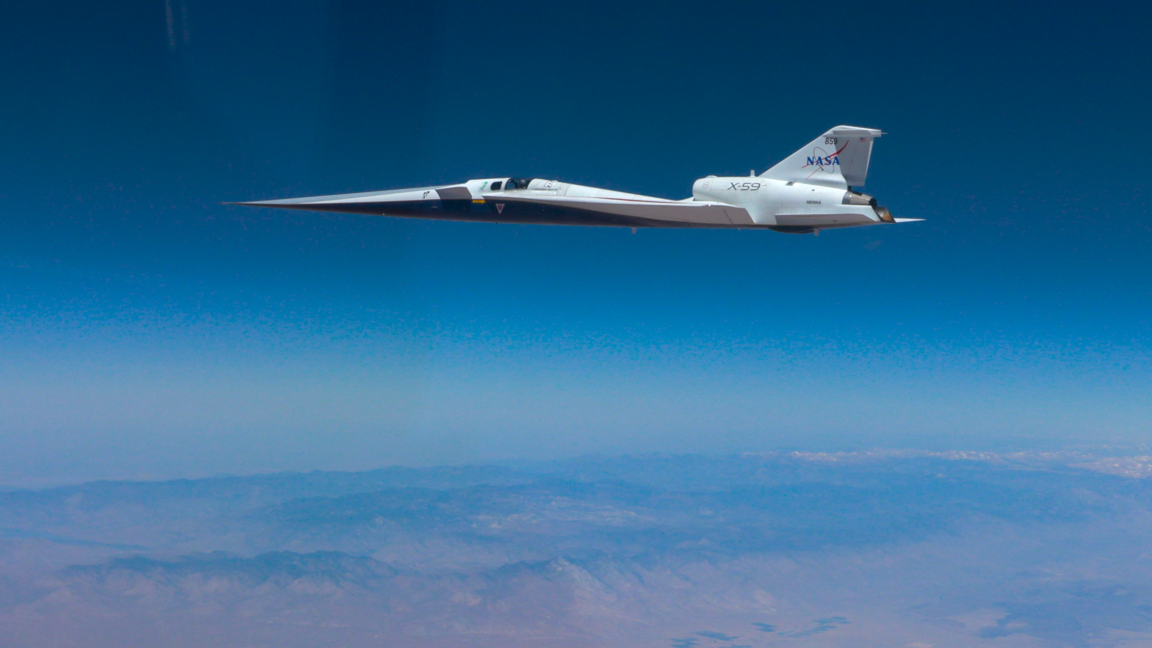
More than two decades since the Concorde supersonic airliner last took to the skies, NASA has been flying an experimental aircraft designed to replace loud sonic booms with a quieter thump equivalent to a car door slamming shut 20 feet away. A successful NASA flight test program could influence the design of future supersonic airliners capable of flying overland routes without rattling buildings—and people’s nerves.
The Lockheed Martin X-59 Quesst—an acronym for Quiet SuperSonic Technology—first took flight late last year and recently began supersonic test flights. But unlike with many experimental “X-plane” aircraft that may never leave restricted airspace near Edwards Air Force Base in California, NASA plans to eventually take the X-59 on a tour around the United States so residents of various cities and towns can provide feedback on the quieter sonic “thumps” it produces.
“Usually an X plane is kind of bare-bones—‘cobble it together from a bunch of parts from other airplanes and just demonstrate one thing,’” said Jim “Clue” Less, a NASA test pilot and aerospace engineer, in an interview with Ars. “We need to demonstrate that one thing, but then we need a plane that's robust enough that we can fly it all over the place and gather that data.”
This story was first published by Ars Technica. Read the original report
We use cookies to run this site and, with your consent, to measure traffic and improve our content. Necessary cookies are always on. You can accept all cookies or choose which ones to allow. Privacy policy.