International News Portal10 November 2026Headlines from established publishers
World
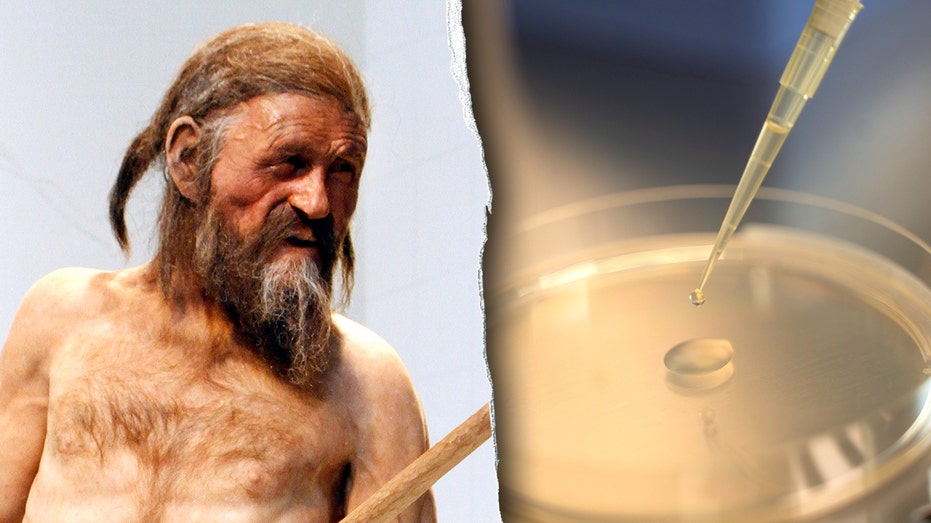
Scientists find 'signs of life' inside 5,300-year-old mummy in remarkable discovery
Researchers found ancient microbes inside Ötzi the Iceman that may have persisted over 5,300 years. A new study shares details of a rare glimpse into microbial history.
Researchers have uncovered traces of ancient microbes inside a mummy — unexpected "signs of life" that may have persisted for more than 5,300 years.
The study, recently published in the journal Microbiome, centers on Ötzi the Iceman, a mummy found by a tourist inside a glacier in the Alps in 1991, news agency SWNS reported.
Ötzi's remains date back to 3300 B.C., before Stonehenge and the Egyptian pyramids were built. He was between 25 and 35 years old when he died, and stood roughly 5 feet 2 inches tall.
Researchers originally believed he succumbed to exposure or exhaustion while crossing the Alps, though later examinations found that an arrowhead was lodged in his left shoulder — suggesting he likely bled to death.
Experts at Eurac Research found that Ötzi's remains still contain a complex community of ancient and modern microorganisms — offering a rare glimpse into the microbial past of early humans.
While studying the mummy at the South Tyrol Museum of Archaeology in Bolzano, Italy, researchers found cold-adapted yeasts and genetic traces of bacteria from Ötzi's ancient gut microbiome.
They also differentiated between microorganisms that were present during Ötzi's lifetime and those that colonized his body after his death, using tissue samples, swabs and genetic analysis.
The team analyzed ice from the surface of Ötzi’s body, as well as meltwater inside the mummy. Researchers also drew on intestinal tissue and stomach-content data from previous studies.
A surprising discovery was the presence of cold-adapted yeast species, likely originating from the glacial environment, which have persisted on Ötzi’s body to the present day.
Ötzi's microbiome is also unique in that it contains gut bacteria that aren't typically found in the intestines of modern humans, researchers said.
"Ötzi therefore offers a rare glimpse into humanity’s microbial past," Eurac Research noted in a statement.
Some of the microbes may still exist in a dormant state more than 5,000 years after Ötzi's death, as his body sits at the South Tyrol Museum, the experts said.
Elisabeth Vallazza, director of the South Tyrol Museum of Archaeology, described the mummy's preservation condition as "very stable today."
Despite the findings, there is still mystery surrounding how microorganisms survive and interact within Ötzi's frozen remains.
The conditions "are not yet fully understood," said conservation expert and co-author Marco Samadelli, as SWNS reported.
"This study expands our knowledge in this area."
Frank Maixner, director of the Institute for Mummy Studies at Eurac Research, said the discovery points to a continuous presence of certain microorganisms on the mummy throughout its long history.
Earlier this spring, officials announced that researchers from the University of Barcelona discovered a copy of Homer's "Iliad" placed on top of a mummy in Egypt.
We use cookies to run this site and, with your consent, to measure
traffic and improve our content. Necessary cookies are always on. You
can accept all cookies or choose which ones to allow.
Privacy policy.