


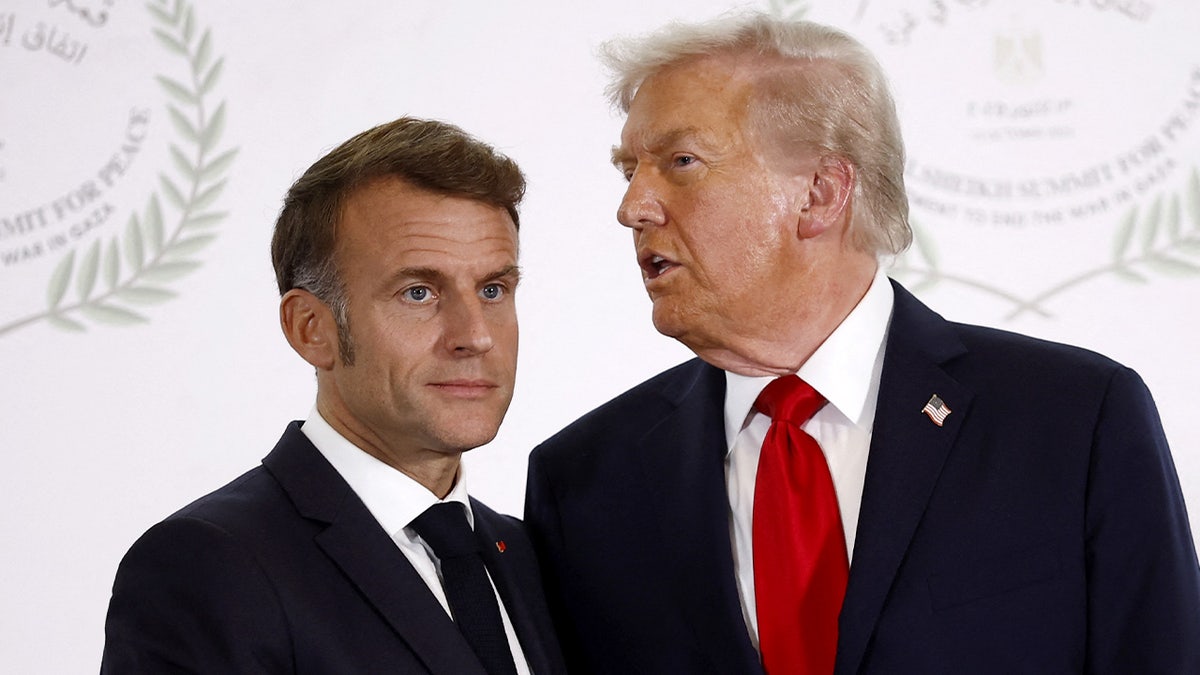
AMB. GORDON SONDLAND: Europe can’t condemn Iran, then complain when Trump finally acts to stop it
Iran's nuclear program, proxy warfare through Hezbollah and Houthis, and ballistic missiles all threaten Europe, yet leaders avoid hard decisions.
European leaders have spent years warning that Iran must never be permitted to acquire a nuclear weapon. They have condemned Tehran’s ballistic-missile program, its financing of terrorism, its use of proxy forces, its attacks on commercial shipping and its serial violations of international agreements.
TRUMP'S 60-DAY IRAN DEAL REACHES HALFWAY MARK AS CEASEFIRE COLLAPSES INTO ESCALATING WAR
Yet when President Trump concluded that the threat required military action, much of Europe’s response focused not on Iran’s conduct, but on whether European capitals had been sufficiently consulted.
That complaint is difficult to take seriously.
European governments were not ignorant of the intelligence picture. Their intelligence services have followed Iran’s nuclear program, missile development, terrorist networks and regional proxies for decades. They have reviewed the same broad threat assessments, watched the same enrichment trends and issued many of the same warnings.
MACRON UNDER FIRE OVER IRAN, HEZBOLLAH POLICY AS TRUMP ADMIN HOSTS ISRAEL-LEBANON TALKS
They may not have possessed every piece of operational intelligence available to the president, but they understood the direction of travel. They knew the danger was growing. They also knew that, eventually, someone would have to act.
Europe’s preferred strategy was to play ostrich: acknowledge the threat, avoid the hard decision, wait for the U.S. to take the lead, and then feign surprise at the result.
That arrangement is politically convenient. It allows European leaders to benefit from American power while distancing themselves from its use. Washington absorbs the military risk and political criticism. Europe preserves its diplomatic posture and complains about process.
AMERICANS ARE NOT GIVING UP ON NATO, BUT THEY EXPECT EUROPE TO DO ITS SHARE
But Europe cannot have it both ways.
If Iran is a common threat to the democratic world, as European leaders have repeatedly said, then confronting it cannot remain principally an American responsibility. Europe cannot rely on U.S. military power, criticize Washington for acting, and then expect to enjoy the security benefits of the action without accepting any of the burdens.
This is not merely President Trump’s war, nor is it solely America’s problem. It is a conflict involving the security of the Western world.
Iran’s leaders do not regard the dispute as one between Tehran and Washington alone. They view the U.S., Europe and Israel as parts of the same hostile political and cultural bloc. Iranian intelligence operations have reached European soil. Iranian-backed groups have threatened European citizens and interests. Iranian missiles increasingly place European territory within range. European economies depend on maritime trade routes that Tehran has repeatedly threatened to disrupt.
Europe cannot plausibly believe that by doing little more than it is doing today, Iran will somehow spare it.
Passivity is not neutrality, and it does not purchase immunity. Tehran is unlikely to distinguish between an American adversary and a European government that quietly benefits from American protection. A regime prepared to use terrorism, hostage-taking, maritime coercion and proxy warfare will not reward European hesitation with safety.
The most important contribution Europe can make now does not require firing a shot or spending another euro.
It requires political unity.
There should be no public daylight between the U.S. and its principal European allies over the strategic objectives. Tactical disagreements are inevitable and can be addressed privately. But public equivocation, procedural complaints and ritual calls for "restraint by all sides" are interpreted in Tehran as evidence that the Western alliance can be divided.
That perception encourages Iran to wait out the pressure, manipulate European governments and bet that Atlantic unity will eventually collapse.
The greatest strategic gift the West could give Tehran is the appearance of division. The greatest deterrent it can present is the opposite.
European Commission President Ursula von der Leyen, German Chancellor Friedrich Merz, French President Emmanuel Macron, Italian Prime Minister Giorgia Meloni and British Prime Minister Keir Starmer should state clearly that the U.S. and Europe share the same objectives and will remain aligned until they are achieved.
Those objectives must extend beyond the nuclear issue.
Preventing Iran from obtaining a nuclear weapon is essential. But ending Iran’s reliance on proxy armies is equally important.
For decades, Tehran has used Hezbollah, Hamas, the Houthis, Iraqi militias and other armed groups to attack adversaries while maintaining a thin layer of deniability. Proxy warfare has allowed Iran to impose enormous costs on the region without accepting the consequences of conventional state aggression.
A strategy that addresses nuclear weapons while permitting Iran’s proxy network to remain intact would solve only half the problem. Tehran could continue destabilizing neighboring countries, attacking shipping, threatening Israel, striking American forces and intimidating European governments without possessing a nuclear bomb.
The proper Western objective should therefore be straightforward: no nuclear weapon and no Iranian-controlled proxy network operating with impunity.
Europe’s first responsibility is to support that objective publicly and without qualification.
Its second is to provide practical assistance.
European governments should make allied bases fully available, without political caveats designed for domestic consumption. They should expand intelligence sharing, logistics support, missile-defense cooperation and maritime surveillance. European navies can provide minesweepers, escort vessels, patrol aircraft and other capabilities needed to protect international shipping.
Freedom of navigation through the Strait of Hormuz is not an American charity project. It is an economic necessity for Europe. European manufacturers, consumers and energy markets all depend on stable global commerce. If Iran can mine waterways, seize vessels or manipulate energy prices without a united response, Europeans will bear a substantial share of the cost.
Countries that deny access to bases or obstruct allied operations should face political consequences. Spain, in particular, should not be permitted to benefit from the protection of the Atlantic alliance while frustrating efforts directed at a common threat. Alliance membership entails obligations, not merely benefits.
This is the broader meaning of burden-sharing.
President Trump has long argued that Europe must assume more responsibility for its defense. The debate has usually centered on military spending as a percentage of gross domestic product. But burden-sharing is not simply an accounting exercise. It also means standing with the U.S. when common security interests require difficult action.
For generations, Americans have accepted extraordinary commitments to protect Europe. They have stationed troops on the continent, maintained nuclear deterrence, funded military infrastructure and repeatedly made clear that an attack on Europe would be treated as an attack on the U.S.
Reciprocity demands more than gratitude. It demands solidarity when America confronts a threat that Europe itself has repeatedly identified.
CLICK HERE FOR MORE FOX NEWS OPINION
Critics will argue that stronger European support risks escalation. But the opposite is at least as likely. Weakness, hesitation and division invite miscalculation. They encourage authoritarian governments to believe that democracies lack the will to defend their stated interests.
Deterrence works when an adversary believes its opponents possess both the capacity and the unity to act.
For too long, Europe has attempted to separate diplomacy from power. It has treated negotiation as an alternative to leverage rather than as a means of employing it. The result has been years of agreements, sanctions relief, diplomatic outreach and warnings, while Iran continued enriching uranium, improving missiles and expanding its proxy apparatus.
Diplomacy remains necessary. But diplomacy unsupported by credible force becomes little more than managed delay.
No responsible leader should welcome war with Iran. The objective should not be permanent conflict or regime-change adventurism. It should be to destroy the capabilities that threaten the West and restore deterrence on terms Tehran understands.
Europe has already concluded that Iran poses an unacceptable danger. Its leaders have said so for years.
The question is no longer whether Europe understands the threat.
It is whether Europe is finally prepared to act as though it does.