International News Portal25 November 2026Headlines from established publishers
World
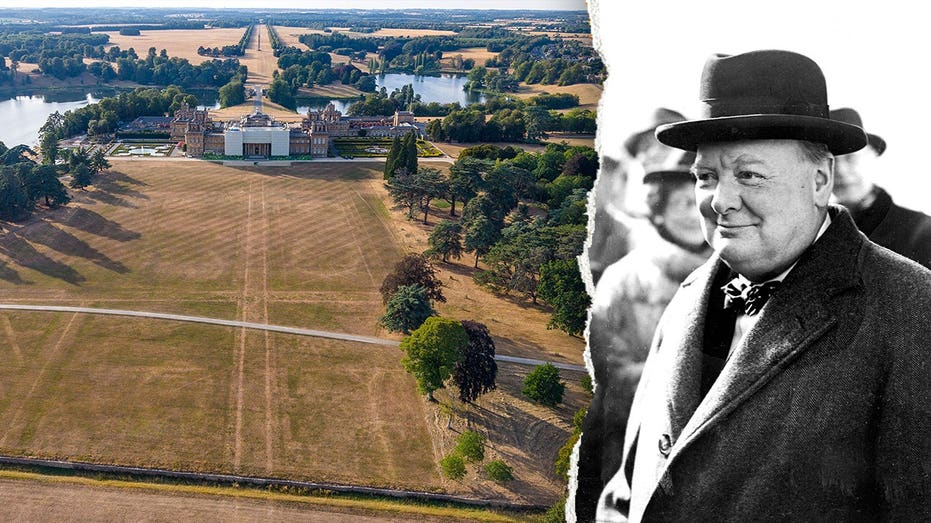
Ghostly outline of long-lost garden at Winston Churchill's birthplace revealed in aerial photos
Aerial photos reveal the outline of a 300-year-old formal garden at Blenheim Palace, Winston Churchill's birthplace, after dry weather created parch marks across the grounds.
Sweltering heat in the United Kingdom has revealed the remains of a long-lost 18th-century garden at a major tourist attraction.
Aerial photos show the outline of the 300-year-old formal garden at Blenheim Palace, an estate about eight miles northwest of Oxford, England, news agency SWNS reported.
Blenheim Palace, a UNESCO World Heritage Site built between 1705 and 1722, is famously the birthplace of Sir Winston Churchill, as well as the ancestral home of the Dukes of Marlborough.
The outline was revealed during the latest heat wave this summer after prolonged dry weather created parch marks, or dry patches in the grass, across the grounds.
A spokesperson from Blenheim Palace told Fox News Digital the marks will be visible "until cooler temperatures arrive and sufficient rain falls to green up the shallow-rooted grass."
"There isn't currently any rain in the forecast for the next few weeks, so it will be visible for a while yet," the representative added.
The patches, officials say, reveal the outline of the original garden, giving a glimpse of what it looked like 300 years ago.
In a statement, Blenheim Palace head gardener Andy Mills said the parch marks "allow us to trace the intricate design and scale of the original parterre."
"The excessively dry weather has given us a fascinating bird's-eye view into Blenheim’s past," said Mills, as SWNS noted.
Mills added, "It’s a brilliant reminder of the formal gardens that came before and the layers of history that continue to shape the palace’s landscape."
The palace is popular among tourists for its opulent State Rooms and extensive gardens, as well as the room where Churchill was born.
The discovery follows other recent historical finds shedding light on life in 18th-century Britain.
Last summer, archaeologists unveiled the remarkably well-preserved wreck of the British warship The Northumberland, which sank off the coast of Kent, England in 1703.
We use cookies to run this site and, with your consent, to measure
traffic and improve our content. Necessary cookies are always on. You
can accept all cookies or choose which ones to allow.
Privacy policy.