


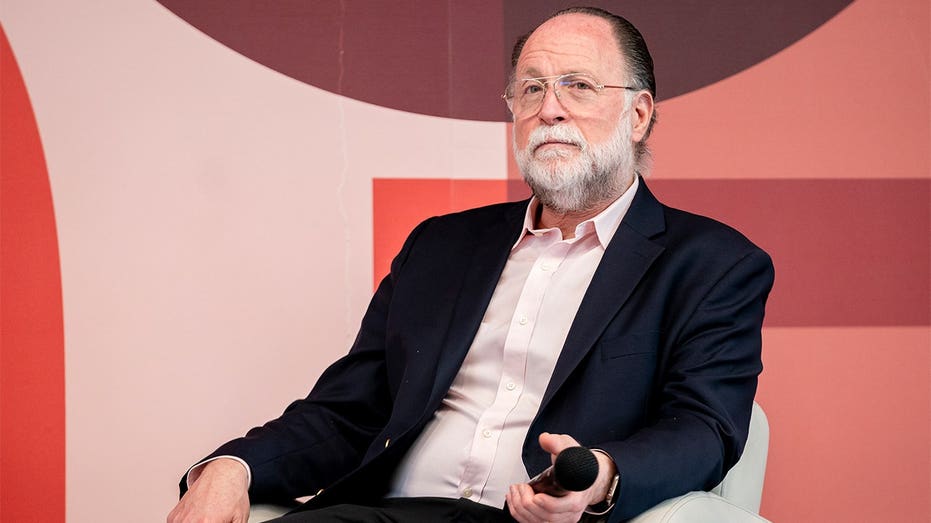
Harvard professor caught using AI to condense Financial Times op-ed trashing Trump tariffs
Harvard professor Ricardo Hausmann is facing backlash over the use of AI to condense a opinion piece he wrote for the FT, according to an editors note written at the top.
A Harvard professor is facing criticism for using AI to condense a longer iteration of an opinion piece written for the Financial Times (FT) on Thursday.
"Trump is taxing the dark matter that pays America’s way," read the headline of the piece by Harvard professor Ricardo Hausmann. The piece was published by the FT on August 13.
"It has come to our attention that AI was used to condense a longer draft of this column prior to submission to the FT and our own editorial involvement. The FT editorial code of conduct specifically prohibits the use of AI in the writing process," an editor's note at the top of Hausmann's piece says.
The FT told Fox News Digital the publication was going to conduct an "editorial review process to look at this piece in more detail," but otherwise pointed to the editor's note.
NEW YORK MAGAZINE SEVERS TIES WITH WRITER ROSS BARKAN, UPDATES 67 COLUMNS FOLLOWING PLAGIARISM PROBE
Harvard and Hausmann did not immediately respond to Fox News Digital's request for comment.
"The verdict on the first full year of the largest US tariff increase in almost a century arrived quietly, in the tables of the US Bureau of Economic Analysis. America’s current account deficit in 2025 was $1.18tn — virtually identical to the year before. The most protectionist turn in living memory did not move the number it was meant to shrink," the first paragraph of Hausmann's piece read.
"That much was predictable — a matter of accounting necessity rather than economic argument," the column continued. "A current account deficit is not a scorecard of trade cheating; it is the gap between what a country invests and what it saves, and tariffs alter neither."
REP. TED LIEU: AI IS ALREADY TOO POWERFUL. WE NEED A KILL SWITCH BEFORE DISASTER STRIKES
The piece by Hausmann garnered reaction online, as Bloomberg's Joe Weisenthal wrote on X, "I have learned a lot from @ricardo_hausman, I'm a big appreciator of his thought, and have enjoyed talking with him. And yet I find this astonishing, both in its writing and its publication."
Dartmouth Political Scientist Brendan Nyhan posted an image on X showing Pangram, an AI detection software, finding that 71% of the text was "AI-generated."
A Harvard student and freelance writer, Alex Bronzini-Vender, wrote on X, "Gotta be the worst AI slop I’ve seen in a major publication."
Hausmann is a professor at Harvard University's John F. Kennedy School of Government and the director of the Harvard Growth Lab.
This comes as higher education institutions are grappling with how to approach AI with their students. While many universities have AI polices and some professors have returned to paper tests and taken other measures aimed at preventing students from improperly using AI, Harvard University Senior Research Fellow Christopher Dede said colleges are focusing on the wrong problem and are not adequately preparing students to face a world in which AI is ubiquitous.
CLICK HERE FOR MORE COVERAGE OF MEDIA AND CULTURE
"The problem is that our educational systems are geared to teaching reckoning, and their quality is measured by assessing reckoning, the GRE, the SAT, the LSAT, et cetera, et cetera," Dede told Fox News Digital.
"And, so, what we're doing is preparing human beings to lose to AI as opposed to preparing human beings with skills that complement AI," he added.