


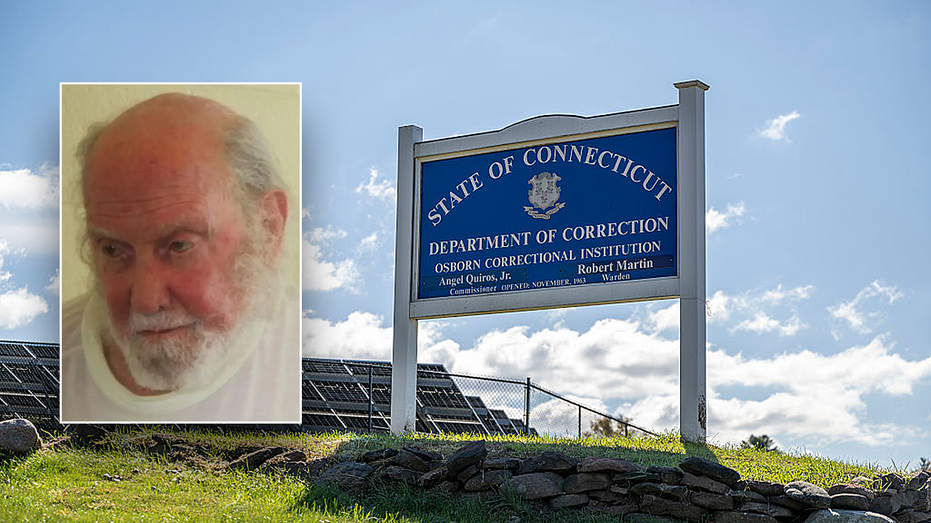
Longest-serving US prisoner dies at 101 after escaping death penalty 8 times
The longest-serving inmate in U.S. history died at 101 after escaping the death penalty eight times for the killing of a night watchman at a Connecticut yacht club.
A man believed to have been the longest-serving prisoner in U.S. history has died at the age of 101, having his execution scheduled and postponed eight times as he maintained his innocence despite a murder conviction in Connecticut.
Francis Clifford Smith died in his sleep in late June at 60 West, a secured Connecticut nursing facility that cares for older people in the justice system, according to the facility.
Smith, who was just months away from turning 102, was cremated without a funeral.
"Essentially, he died of old age," 60 West spokesman David Skoczulek told the BBC. "He had very limited family involvement around his passing but we assured it was appropriate, met his wishes and was dignified."
CALIFORNIA INMATE WHO SPENT 45 YEARS ON DEATH ROW FOR MURDERING PREGNANT WIFE DIES
Smith was 25 when he was first sentenced to death for the fatal shooting of Grover Hart, a 68-year-old night watchman at a Connecticut yacht club, during an attempted robbery on July 23, 1949. Smith was one of two men arrested in connection with the killing. The other man, George Lowden, took a plea deal and initially implicated Smith, although Lowden later said authorities had beaten him into making the statement and refused to testify against Smith at trial.
Over the next 76 years, Smith was scheduled to be executed eight different times, but he was spared on each occasion, according to the Boston Globe.
He continued to maintain his innocence up until his death, his friends told the BBC.
"I’m in here on no evidence at all," he told the Boston Globe in 2023.
Over the years, questions about the evidence against Smith emerged as a witness recanted, Lowden repudiated his earlier statement implicating Smith and another man claimed responsibility for Hart's killing. Those developments contributed to repeated efforts to prevent Smith's execution and obtain a new trial.
"I'm not even sure he was present at the murder," Major Leo Carroll, one of the officers who had interrogated Smith after his arrest, testified to the Board of Pardons right before his eight planned execution, according to the Boston Globe.
A key witness later recanted her account linking Smith to the crime, while Lowden repudiated his earlier statement implicating Smith. Another man serving time in Alabama later claimed that he, rather than Smith, had been involved in Hart's killing.
Smith nevertheless never received a new trial. A judge who reviewed the other man's confession rejected it as not credible, and Smith's murder conviction remained intact.
Smith’s death sentence was commuted to life in prison in 1954.
He served 76 years behind bars, except for three short stints of freedom, including 12 days on the run after he escaped in 1967.
Then, in 1975, he was granted parole and remained free for about 10 months before he was arrested on larceny and weapons charges and returned to prison for violating parole. The Boston Globe reported that he was not ultimately convicted of those charges.
Records indicate Smith declined or refused to participate in several later parole efforts, although he later disputed that characterization and said he could not remember. But in 2020, he agreed to go on supervised parole to the nursing facility where he recently died.
He reportedly had dementia at the end of his life. Connecticut’s Department of Correction has not confirmed this diagnosis but said Smith was struggling with issues associated with old age.
"He was 101 and a half," Andrius Banevicius, the public information officer for Connecticut’s Department of Correction, told the BBC. "He did pretty well as far as longevity is concerned."