


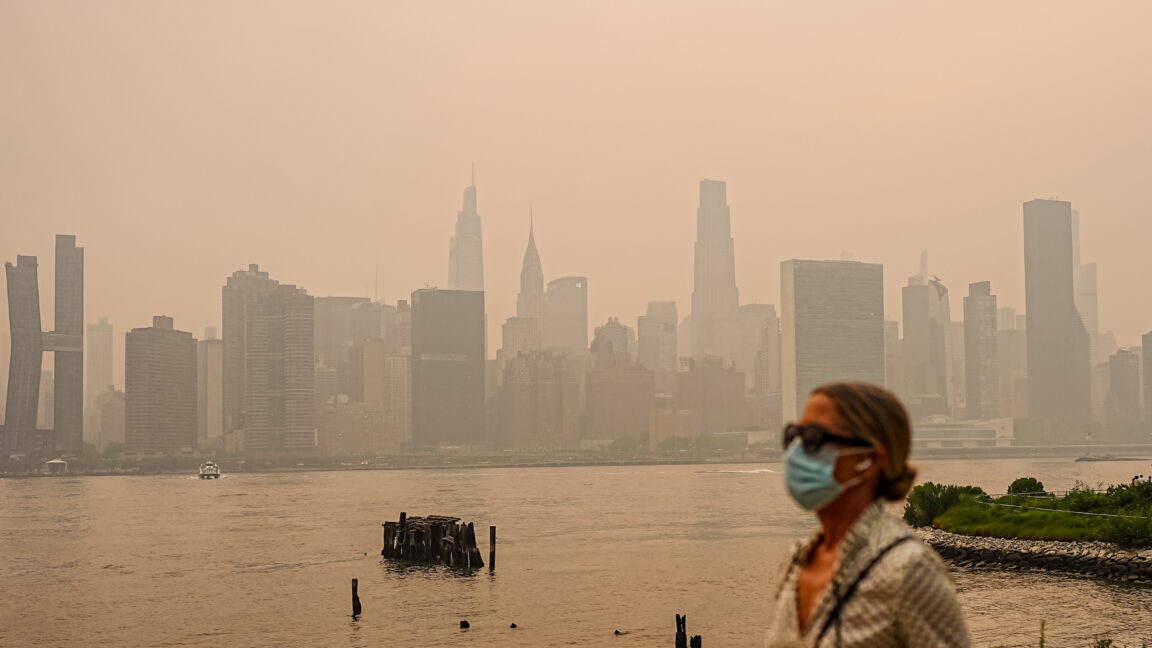
Wildfire smoke now bigger prenatal threat than human sources of air pollution
Regulations reduced prenatal exposure to harmful emissions, but wildfire smoke is erasing gains.
In 1965, a presidential advisory panel issued a report warning that pervasive chemical and carbon pollution was harming environmental health and changing the climate. Five years later, President Richard Nixon signed the Clean Air Act.
Since that 1970 law and its amendments were passed, combined emissions of a half-dozen harmful air pollutants from vehicles and industrial sources have decreased by nearly 80 percent.
But mounting evidence shows that pollution from wildfire smoke is eclipsing those air-quality gains. The unchecked burning of fossil fuels is creating warmer, drier conditions that make wildfires more intense and destructive, and blanket communities in toxic smoke that is more harmful than pollution from other sources.