


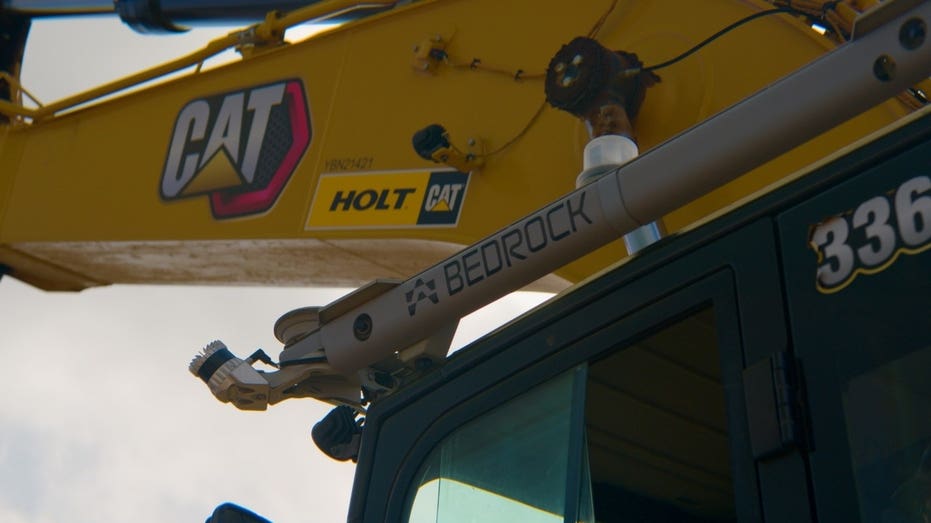
Autonomous excavators are digging with empty cabs
Bedrock Robotics says its autonomous excavators are doing paid earthwork on active job sites in Texas and Nevada with no operator in the cab.
If you have ever driven past a construction site and watched an excavator moving huge piles of dirt, you probably figured there was an experienced operator sitting in the cab. On some job sites in Texas and Nevada, there is nobody in that seat.
San Francisco-based Bedrock Robotics has autonomous excavators doing real commercial earthwork with no operator onboard. The company says the deployments follow a year of testing on active job sites with human supervision.
Seeing AI take over software tasks is one thing. Watching it control a massive excavator on a live construction site feels very different. Bedrock says this could help contractors deal with worker shortages and keep projects moving more efficiently. Here's how the technology works and what could come next.
Missed CyberGuy LIVE? Watch the Protect Your Money replay
Our free CyberGuy LIVE class, Protect Your Money From Today’s Biggest Threats , has ended, but you can still watch the full replay and download our financial protection checklist. Kurt "CyberGuy" Knutsson walks you through five simple ways to help defend yourself against AI scams, fraud, identity theft and financial hacks. You’ll learn how to set up bank alerts, strengthen your account logins, protect your phone number, freeze your credit and help secure your retirement savings against unauthorized transfers. No technical experience is needed.
Get the free replay and checklist now at CyberGuyLive.com
100 KODIAK DRIVERLESS TRUCKS ARE HEADED FOR PUBLIC ROADS
Bedrock says its operator-free excavators are now active on major infrastructure projects. One machine is working on a Nevada water treatment facility with Sundt Construction. In Texas, Bedrock is working with Champion Site Prep on a multi-million-cubic-yard earthwork project.
The company also has a 1.2 million-cubic-yard civil sitework project with Zachry Construction Corporation. The current work centers on rough early earthmoving and foundation prep.
The company is concentrating on clearing earth, cut-and-fill operations and rough cuts before moving into more detailed work. That makes sense because earthwork comes early in a project. If crews fall behind there, everything that follows can feel the delay.
Bedrock measures excavator productivity by the cubic yards of earth moved during a shift, a company spokesperson tells CyberGuy.
How much earth a machine should move depends on the project, soil conditions and the rest of the equipment involved. Still, the spokesperson says, "As of our deployments in August 2026, two years after the company was founded, we are already near human-level productivity."
Bedrock calls its system the Bedrock Operator. The company designed it as a retrofit for existing heavy equipment. Bedrock says crews can install its sensor and computing package in a day without permanent changes to the machine. Once a site manager sets the initial plan, the software takes over the digging work. Bedrock says its machine-learning system can understand the surrounding area and plan movement. It can then carry out complex tasks.
The company says it trained the system on tens of thousands of hours of field work. However, there is an important detail about the current rollout. Bedrock is deploying new excavators that it outfitted and tested at its own facilities. When we asked when the system would begin operating on contractors' existing equipment, a Bedrock spokesperson said the company has no update to share yet but hopes to have more soon. So the retrofit model remains central to Bedrock's plan. The live operator-free deployments are still in an earlier phase.
Seeing a huge excavator move with nobody inside will probably make some people nervous. Bedrock knows safety will help determine how far this technology goes and says it comes first as the company expands deployment. The machines monitor their own progress while they work. If a machine gets stuck or cannot continue, the system can call for help.
When we asked how often a person needs to step in, a Bedrock spokesperson told CyberGuy, "It's relatively rare." If a machine encounters something unusual or gets stuck, someone monitoring the fleet can briefly intervene until the autonomous system is ready to take back over.
Bedrock also keeps a person in the loop. That gives the system a path to human support without requiring someone to sit in the cab all day. On active sites, that becomes especially important. People walk through work zones. Water trucks and other heavy equipment move nearby.
Bedrock says the safety response happens automatically. "If a person or unauthorized object gets too close to a Bedrock-equipped machine, the machine will automatically stop," the spokesperson said. The excavator stays stopped until the person or object has moved to a safe distance, with no manual intervention required.
HUMANLESS BIG RIG COMPLETES FIRST US FREIGHT RUN
Bedrock picked excavators for a reason. The company says excavators can account for about 25% of a contractor's fleet. They also take years to master.
Bedrock estimates that an operator may need five years or more to fully develop the skill. That creates a difficult staffing problem. Contractors need experienced people, yet many projects involve long stretches of repetitive earthmoving.
Bedrock wants autonomous equipment to handle more of that repeatable production work. Skilled operators could then focus on detailed jobs or supervise a larger operation.
We have seen autonomous excavators before. CyberGuy previously covered HEAP, a 12-ton robotic excavator that built a massive stone wall on its own.
What makes Bedrock different is where the technology is headed now. These excavators are doing commercial work on active job sites as part of real infrastructure projects.
The timing helps explain why investors are pouring money into this technology. Bedrock has raised more than $350 million. Its founding team includes former Waymo engineers who spent years working on autonomous vehicles.
Meanwhile, construction companies are struggling to find enough skilled workers. Bedrock cites industry estimates showing that roughly one in five construction workers is over age 55. Another estimate says more than 40% of the construction workforce could retire within the next five years.
The company also points to research showing that 92% of firms with open craft positions have difficulty filling at least some of those jobs. Those departures could hit contractors while demand remains high across many types of building projects.
Costs add another pressure point. Bedrock cites a McKinsey analysis that found large construction projects typically took 20% longer than scheduled and ran up to 80% over budget.
Then there is safety. Construction accounts for a disproportionate share of workplace deaths compared with its share of the overall workforce. Automation could help reduce exposure to dangerous tasks. However, companies will still need to prove that autonomous machines can work safely around people over long periods.
Bedrock also takes a firm position on what this technology means for equipment operators. "We do not expect operators to be replaced at all," a Bedrock spokesperson tells CyberGuy. In the near term, the company sees Bedrock-equipped machines working alongside existing crews because contractors do not have enough skilled operators to tackle every project. Longer term, Bedrock expects some experienced operators to move into supervisory positions overseeing autonomous equipment. The company compares that future role to becoming a "foreman for machines." At the same time, Bedrock says people who want to continue operating equipment themselves should still have a place in construction for years to come.
The long-term idea goes far beyond one excavator digging by itself. Bedrock wants multiple machines to coordinate across a job site. Bedrock co-founder Kevin Peterson described a future where an excavator could work alongside a bulldozer, truck and grader.
Instead of each machine operating as a separate tool, software could help coordinate the larger job. That could change project scheduling in a big way. A site manager might eventually assign the goal while a connected fleet determines how to move the work forward.
Bedrock says this coordinated model remains on its roadmap. For now, the company is scaling excavator deployments and expanding the types of tasks its system can perform.
Here's why this could affect you. Construction delays can hold up new housing, road projects and water infrastructure. If autonomous equipment can keep earthwork moving when contractors cannot find enough experienced operators, some projects could move faster and stay closer to schedule.
Bedrock says it sees autonomous machines working alongside people rather than eliminating operator jobs. In the near term, that could give existing crews more help with repetitive earthwork. Over time, some experienced operators could end up supervising groups of autonomous machines while others continue working directly in the cab.
Permits and material shortages can still slow a project down. Skilled workers also remain essential for planning, detailed work and handling situations the technology cannot manage on its own.
I'll be watching whether that near-human productivity holds up as these machines move onto more job sites. Bedrock says human intervention is relatively rare today, but I also want to see how that changes when one person is monitoring a larger fleet.
Safety will be the other big test. I want to see what happens when something unexpected enters the work zone. The more autonomous equipment we put around people, the more important that real-world track record becomes.
What catches my attention here is that Bedrock has moved beyond showing what an autonomous excavator might be able to do someday. These machines are already doing paid work on active construction sites with nobody sitting in the cab. Bedrock now tells us the machines are nearing human-level productivity and that human intervention is "relatively rare." Those are encouraging signs, but I want to see how those claims hold up across more projects and over longer periods. I also like hearing Bedrock say directly that it does not expect operators to disappear. If autonomy helps contractors handle more work while experienced people take on tougher jobs or supervise the machines, there could be a real upside for both crews and the projects they build. The real test will come as Bedrock puts more of these machines to work. If they stay safe and productive around real crews, those empty cabs may become a much more familiar sight.
If autonomous machines could help finish construction projects faster, would you be comfortable seeing them on job sites, or would you worry about what they could mean for workers? Let us know by writing to us at Cyberguy.com
Sign up for my FREE CyberGuy Report
Copyright 2026 CyberGuy.com. All rights reserved.