


Caregivers are facing a "generosity paradox": Paying for loved ones but not wanting their kids to do so for them
Caregivers are facing financial strain while supporting elderly loved ones, risking their own security. An Edward Jones report highlights the dilemma.
Barbara Marcanti/Carla Bacon/Danielle Barnum Photography
- Caregivers risk financial security to support older loved ones, creating a "generosity paradox."
- An Edward Jones report reveals caregivers spend $8,700 yearly, sacrificing savings for loved ones.
- Long-term care costs strain families, with many spending six figures on nursing facilities annually.
Many caregivers for older loved ones are stuck in a painful dilemma: They're willing to put their financial security at stake to care for loved ones today, but that leaves them at risk of being a burden on their families later on as they age.
This "generosity paradox" is at the heart of "The Financial Impact of Caregiving" report by Edward Jones, Age Wave, and The Harris Poll, which was shared exclusively with Business Insider. The report found 87% of caregivers providing financial assistance agreed that they didn't want to feel like a burden, while 81% said they were willing to put themselves in a less secure financial position to support their loved ones. These results are based on over 5,000 adults in the US and Canada who are financial caregivers of people aged 65 and over or aged 18 to 64 with disabilities.
It's a contrast that, according to dozens of caregivers who have spoken with Business Insider, has weighed on them emotionally. Many told reporters that reducing their financial security puts them at greater risk of needing support as their health declines, making them feel like a burden. They hope their children won't need to support them to the same extent that they supported their parents.
We are inviting readers to share their stories with Business Insider reporters to help us assemble a comprehensive look at long-term care costs. We want to know how much caring for an older loved one has cost you and your family. Please fill out this form to participate.
The costs of caregiving have increasingly fallen on family and friends, both financially and personally. As the population ages, people are battling health conditions for longer, while support for long-term care has been more strained. Medicare doesn't support most long-term care costs, while Medicaid eligibility varies by state and is at risk in some pockets of the US. Long-term care costs have skyrocketed, and some families told Business Insider they're spending six figures annually on nursing facilities or home health aides.
"An overwhelming number of people want to continue to do this for their loved ones, but they don't want their own family members, their own children, to go through the same thing that they're going through right now," said Vanessa Okwuraiwe, principal at Edward Jones.
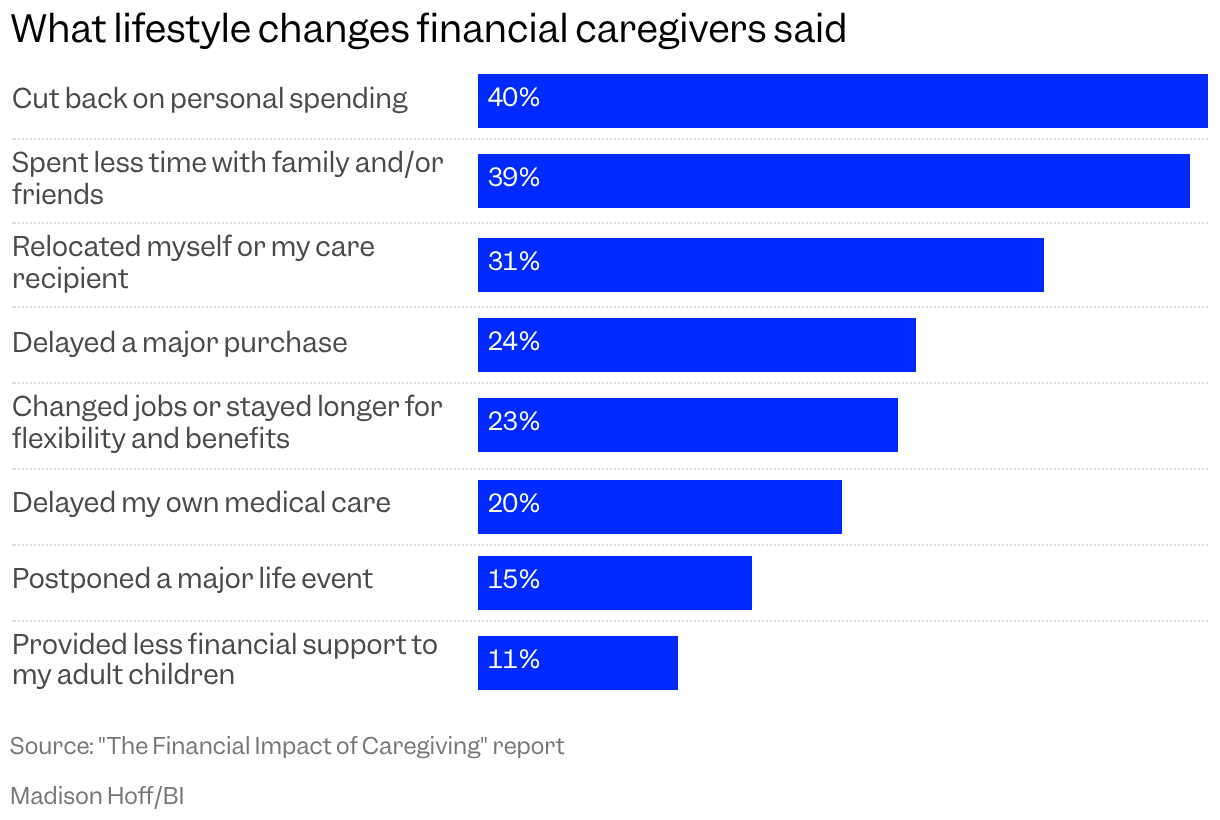
Barbara Marcanti's 102-year-old mom would've needed care costing about $20,000 monthly at a skilled nursing facility, but because she couldn't afford that, Marcanti moved her mom in with her in 2025. Marcanti said she has gladly provided for her mom, but said that her selflessness has affected her aspirations and family.
"There's still a lot I want to do on my bucket list," Marcanti said. "I feel like I'm often passed over by my friends because 'Barb's got to deal with her mom.' I don't want my mom to be my date every time I go out."
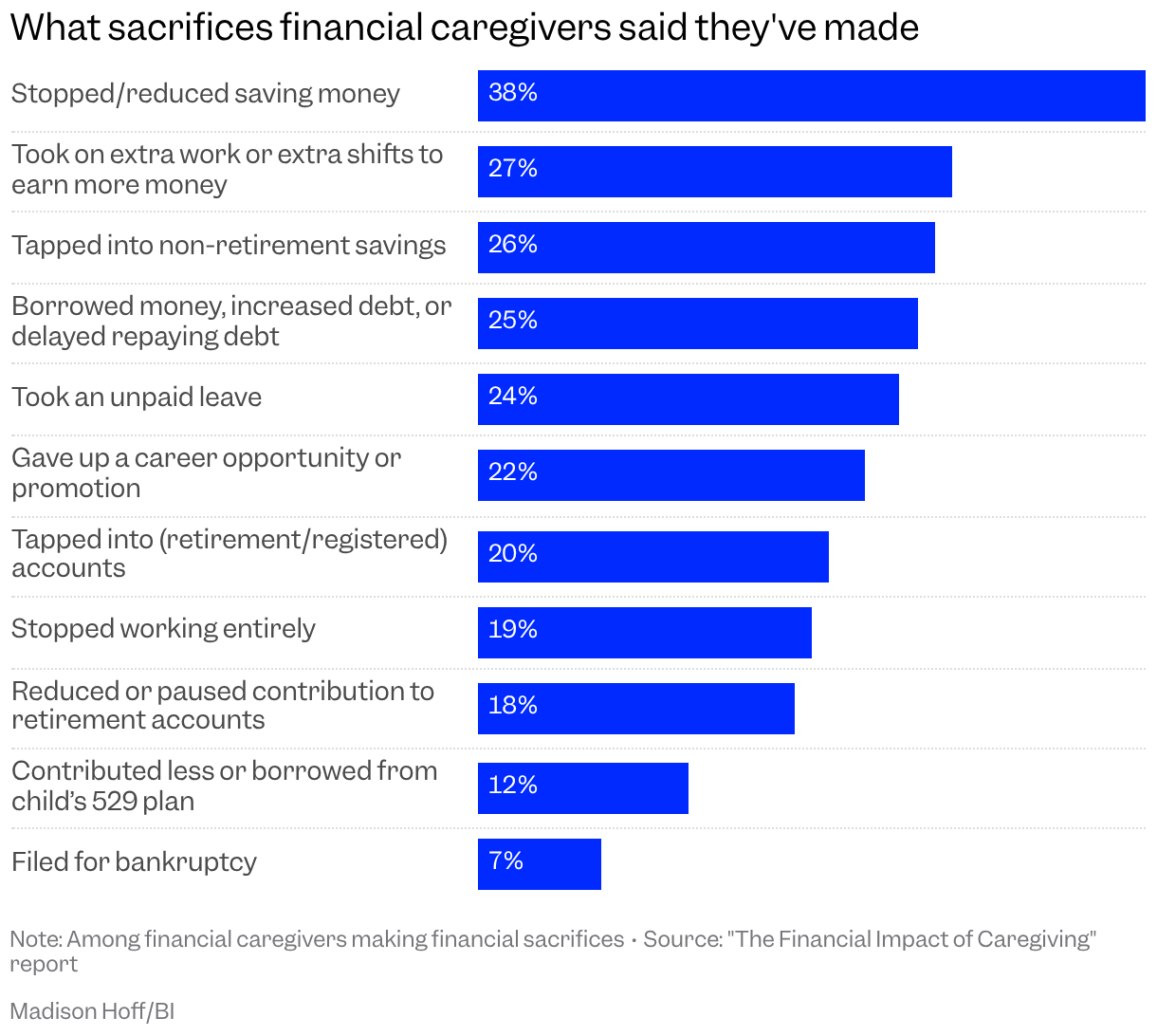
The "generosity paradox" can be seen in how caregivers view themselves. Edward Jones found that only 57% consider themselves "financial contributors" to their loved ones, even though 91% support their care using their own money. Meanwhile, 84% of caregivers are financial contributors, and they devote over $8,700 on average each year. It's led about 70% to sacrifice their savings by cutting back on or pausing their savings contributions.
Many caregivers view their work as done out of love and fulfillment. The survey found that 85% said that caregiving gives them a sense of purpose, while 61% feel guilty that they can't give more of their time and energy to caregiving.
More than half of caregivers support one of their parents, while 16% provide care for a grandparent, according to the report. Nearly half care for both an older loved one and children simultaneously. These sandwiched caregivers devote just over 100 hours a month supporting older care recipients. Spousal caregivers provide the most care hours a month at 189.
Caring for a spouse can have its own challenges, balancing one's own health against one's partner's needs. A few years after her stroke, Carla Bacon, 69, became a caregiver for her 70-year-old husband after his own stroke. Between shifts at her full-time office job, she does everything for him as he builds up the strength to walk again. Hiring a CNA costs them $5,000 a month, and medical supplies run $500 monthly. They've paid out of pocket for a Hoyer lift, a mobility van, a therapy bike, and a special shower.
"I operate on a hope and a prayer," said Bacon, who lives in Oklahoma. "I keep reminding myself that I'm 69. What's life going to look like over the next five years?"
In many cases, adult children struggle to reverse roles with their parent. Kathleen Korpela wished her family had been more prepared when her father was diagnosed with Alzheimer's, including having conversations with her dad and understanding Social Security and all the other financial information she would end up "very quickly and very painfully" catching up on.
"It was extremely challenging to navigate the transition from adult child to effectively parenting my parent," Korpela said. "It was definitely a challenge to navigate that dual role identity without losing myself."
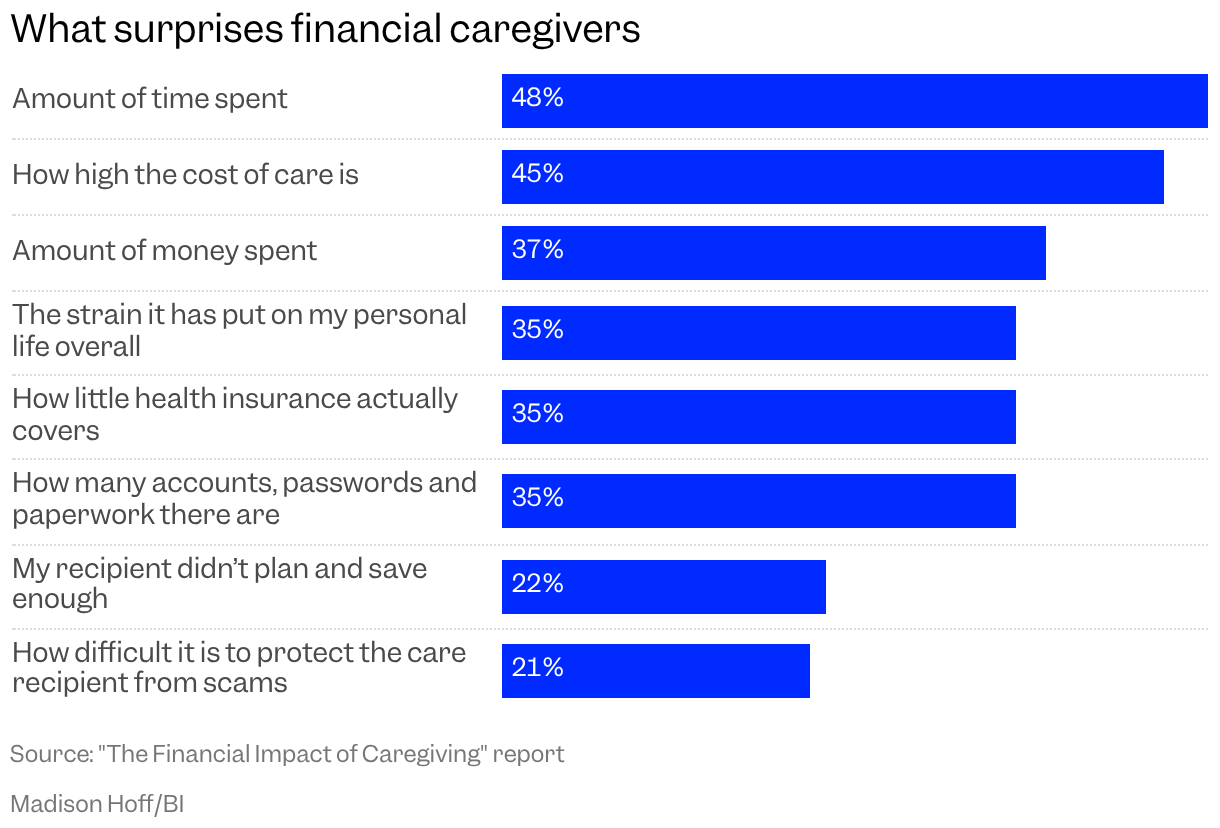
The report encourages people to plan ahead much earlier than they anticipate. Okwuraiwe said that families should have conversations early about preparing for when their loved ones will need part-time or full-time care, making everyone more confident. In one case, someone Okwuraiwe knows didn't have the right documents in place before their parent's Alzheimer's developed.
"Now, they have statements from 10 different financial institutions, and the poor parent is going through Alzheimer's, and their short-term memory is gone," Okwuraiwe said. "They're not able to give guidance as to what they want done with this money."
Read the original article on Business Insider