


Middle-income Americans are feeling the squeeze
A Pew Research Center survey showed that some Americans are cutting back on spending on extras and don't have months of rainy-day funds.
andresr/Getty Images
- A Pew Research survey found only 47% of middle-income earners could save money in the past year.
- Lower-income earners are also having a hard time saving and affording necessities.
- Inflation moving in the wrong direction doesn't help the affordability situation.
America's middle earners are feeling the squeeze.
A new analysis from the Pew Research Center examines how Americans' finances are faring, an especially salient topic in a midterm season where affordability is very much on the ballot.
America's middle earners — those who make between $50,700 and $152,000 after adjusting for their family sizes and the cost of living in their areas — increasingly don't have enough saved for an emergency. Just over half of middle-income Americans say they don't have rainy-day funds that would cover expenses for three months in the event of an emergency.
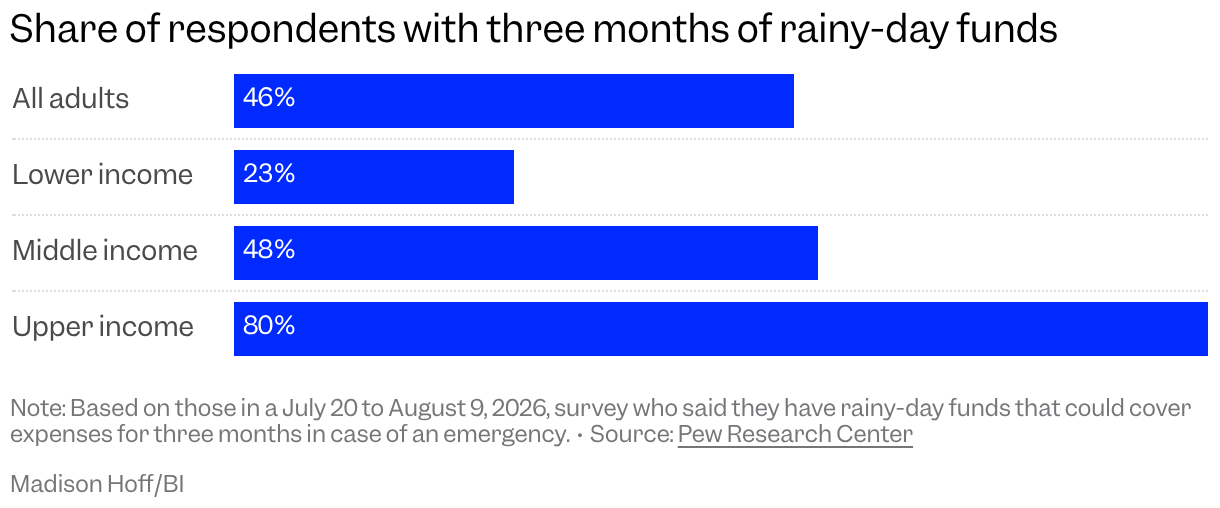
Meanwhile, 47% of middle-income earners — and a measly 24% of lower-income earners — reported being able to save money in the past year. Across all income tiers, the majority of respondents said they had cut back spending on extras like eating out or streaming services.
Those dwindling emergency funds and sacrifices might be due to rising costs, which often take a particularly large bite out of lower-earners' wallets.
It could be getting worse; inflation is moving in the wrong direction. In September, the consumer price index inflation rate rose from 3.4% to 3.7%, just above the 3.6% forecast. Plus, inflation-adjusted wages have been falling for six months.
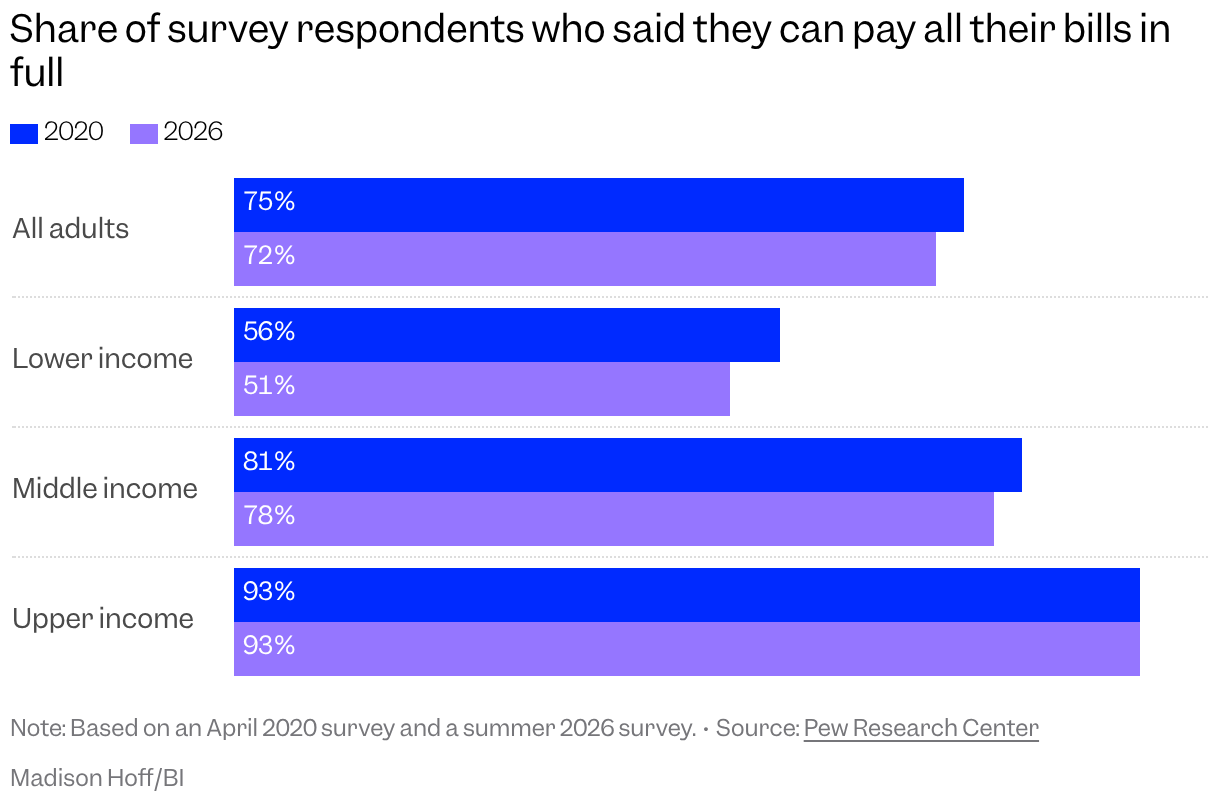
Today's economy is still more difficult for those at the bottom of the earnings ladder. Fifty-one percent of lower-income respondents said they can pay all of their bills in full in the 2026 survey, down from 56% in 2020. For middle-income respondents, the share dropped from 81% in 2020 to 78% in 2026, while the share of upper-income respondents held steady at 93%.
Pew also found 71% of lower-income US adults struggled with at least one kind of basic necessity, like affording medical care or paying their rent or mortgage, in the past year, compared with 39% of middle-income and 13% of upper-income Americans.
But the latest survey marks another sign that middle-income earners are increasingly aligning with their lower-earning peers, a dour sign for the health of the middle class. A separate report from the Urban Institute found that, even as lower-income renters were the most likely to report issues paying the rent, middle-income renters were increasingly likely to report struggling to pay.
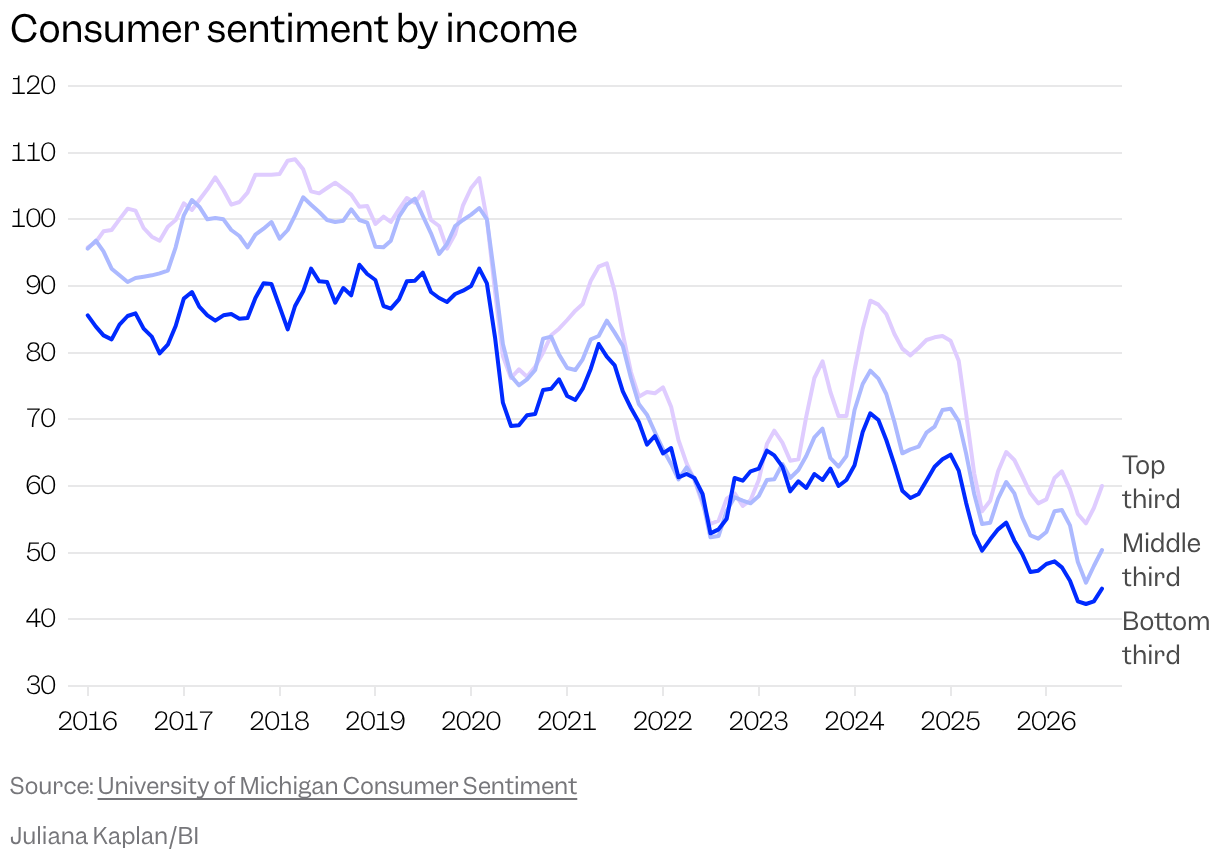
Similarly, middle-income earners' consumer sentiment has switched from mirroring their higher-earning peers to more closely aligning with lower earners — another sign that the middle class is falling on harder economic times.
"Working people are living on the edge, working longer and harder than ever for less money," said AFL-CIO President Liz Shuler. "They're angry every time they fill the tank. They're terrified of what their heating bills will look like this winter."
Read the original article on Business Insider