


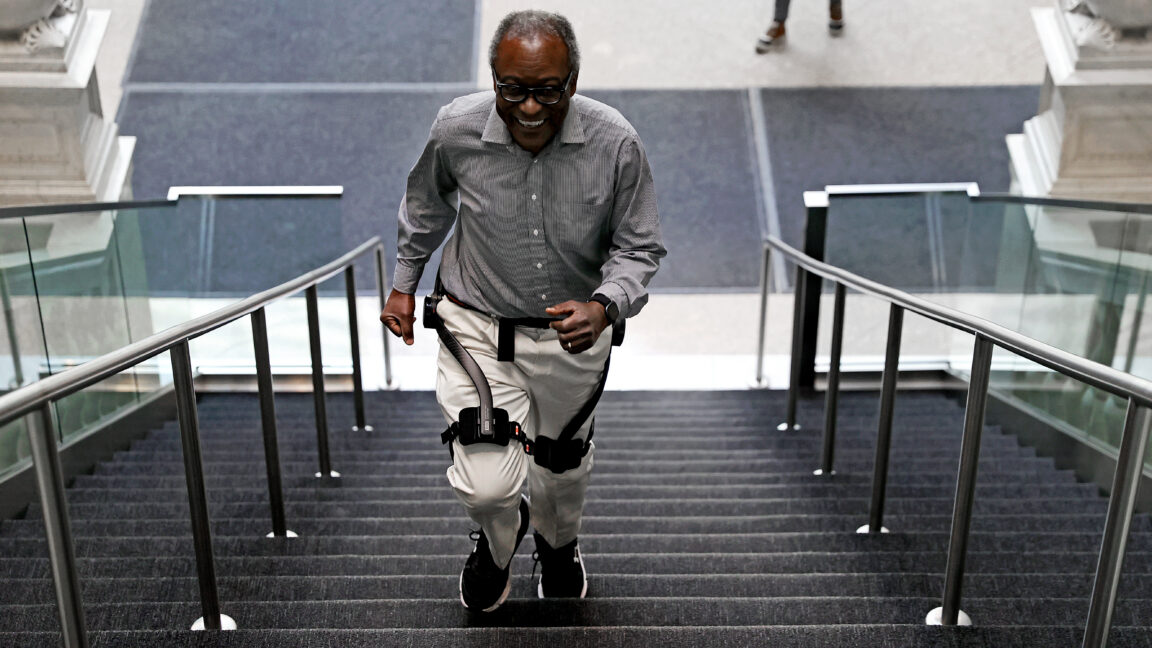
The dawn of the age of the exoskeleton
The devices continue to show noticeable benefits for users in various real-world tasks.
This year, members of Seattle Mountain Rescue have been setting off into the wilds of the US Pacific Northwest wearing an unusual piece of kit.
They’ve been hiking into the wilderness with powered assistive devices attached to their hips and legs. Designed to increase lower-body strength when climbing or carrying heavy loads, these pieces of equipment are being tested to see if they can boost rescuers’ speed and endurance when it matters most—during searches for stranded people.
Devices like these are called human exoskeletons. They attach to parts of the body to create an external—or “exo”—mechanical structure. This powered frame enhances the wearer’s physical capabilities.