


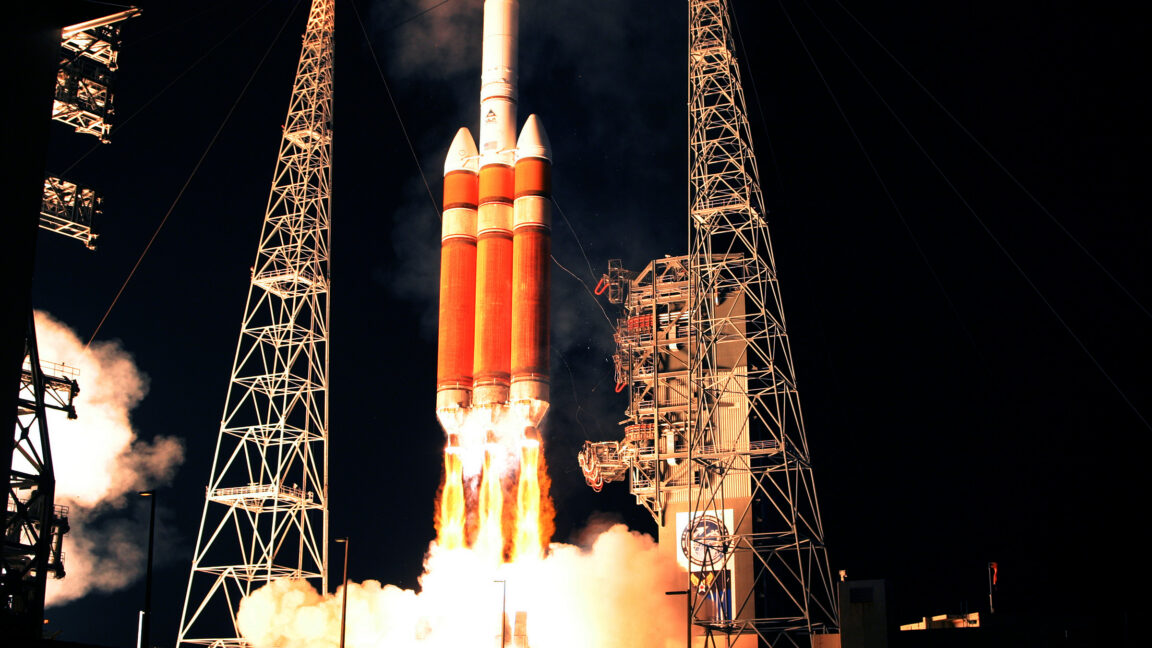
US military ends long-running program to spot nuclear missile launches
A newer program has been operational since 2011, and the next generation could launch within 12 months.
In late 1970, a Titan IIIC rocket launched from Space Launch Complex 40 at what was then called Cape Canaveral Air Force Station. It carried a top-secret payload for the US military.
Much has changed in spaceflight since then. The Titan IIIC would bow out in 1982 after dozens of launches. Various Titans continued launching from Space Launch Complex 40 until 2005, at which point the US Air Force—in a competitive process hotly opposed by United Launch Alliance—turned the pad over to a small, largely unknown startup called SpaceX. And Cape Canaveral is now a "Space Force" station.
But those unspecified payloads? Until last month, some of them were still flying operationally.