America's first Muslim senator exposes a political blind spot
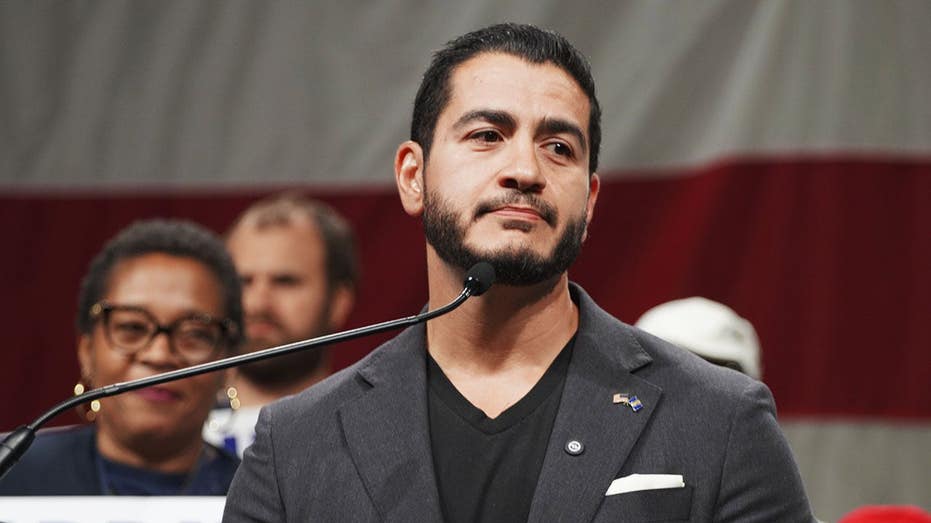
Abdul El-Sayed's election as the first Muslim senator-elect puts Islamism, the Muslim Brotherhood and antisemitism at the heart of a national debate.
Abdul El-Sayed's election as the first Muslim senator-elect puts Islamism, the Muslim Brotherhood and antisemitism at the heart of a national debate.
As a Muslim woman, physician and longtime critic of Islamism, I have witnessed firsthand the consequences of extremist interpretations of my faith.
I have examined the bodies of Jews murdered by Hamas during the Oct. 7, 2023, terrorist attacks in Israel; recorded the testimony of Yazidi and Kurdish victims of ISIS atrocities in Iraq; interviewed children inducted into ISIS and the Taliban; consoled Christians persecuted in Iraq and Pakistan; and walked through the now-dismantled Al Hol detention camp in Syria.
I know deeply the tragedies promulgated by practitioners of my faith who believe in an extremist interpretation of the religion called Islamism or political Islam. I also know there is a rising tide of people who don’t differentiate between the two and believe all Islam is extremist.
'POD SAVE AMERICA' HOSTS WARN EL-SAYED TO TONE DOWN 'CONDESCENSION' ON MUSLIM BROTHERHOOD QUESTIONS
Islamism and anti-Muslim bigotry took center stage in the midterm elections, which delivered the nation’s first Muslim senator-elect, Abdul El-Sayed, D-Mich.
Yet both political parties are challenged in meeting this moment. Republicans too often fail to distinguish Muslims from Islamists, while Democrats seem unwilling to examine the distinction at all. Accusations of "Islamophobia," amplified by the politics of identity and "anti-racism," have further obscured a debate Americans urgently need to have.
Too often, Islamophobia is conflated with anti-Muslim xenophobia to the detriment of Muslim critics of Islamism who seek to expose Islamist influence and to the benefit of Islamist ideology and its allies.
Expect accusations of Islamophobia to be increasingly deployed as a means of diverting scrutiny away from El-Sayed, whose senatorial bid exposed these tensions.
During a television interview, El-Sayed denied that his family was connected to the Muslim Brotherhood. After the election, he joked about the allegations, mocking his critics.
Republicans frequently mishandled the issue.
Vice President JD Vance called El-Sayed "very, very evil." President Donald Trump repeatedly labeled him a "jihadist." Rep. Nancy Mace, R-S.C., made sweeping statements questioning Muslims’ fitness for political office. Such attacks risk alienating Muslim voters and undermining legitimate scrutiny of El-Sayed’s political associations, statements and policy positions.
Republicans will continue to struggle with these questions until they understand how Islamism covertly exploits democratic institutions and electoral politics — a challenge identified overseas.
A 2025 French government report on the Muslim Brotherhood examined "Islamist entryism," or Muslim Brotherhood efforts to build influence through local institutions, associations and political structures.
EL-SAYED'S PAST MUSLIM BROTHERHOOD COMMENTS RAISE RED FLAGS AS HE EYES POWERFUL ROLE
Republicans are not alone in their failure to distinguish Islamist political activity from apolitical pluralism.
Too often, Democratic leaders dismiss legitimate questions about Islamist ideology as "Islamophobia," even as disputes over antisemitism, anti-Zionism and the Israel-Hamas conflict deepen divisions within their party.
Following the midterms, former Chicago Mayor Rahm Emanuel faced questions from Fox News host Brian Kilmeade about rising antisemitism and anti-Israel activism within Democratic politics. His responses illustrated the difficulty party leaders face in confronting these divisions.
Fox News Digital investigative reporter Asra Nomani documented another revealing moment three days after the election, when El-Sayed attended the Arab America Foundation’s national summit where an event leader celebrated El-Sayed’s victory with the declaration, "You destroyed AIPAC twice," before invoking "Free Palestine" and "From the river to the sea."
El-Sayed smiled as these remarks were delivered, without publicly challenging them at that moment.
The phrase "From the river to the sea" is interpreted by many Israelis and Jews as a call for Israel’s elimination, although some Palestinian advocates claim it is a demand for freedom and equal rights.
Such ambiguity makes it all the more important for elected officials to explain what these slogans mean and whether they support Israel’s continued existence as a Jewish state.
JEWISH LEADERS IN MICHIGAN PREPARE TO WORK WITH ABDUL EL-SAYED DESPITE LINGERING CONCERNS
As an expert on Islamism, I can see how such public celebration raises serious questions about the ideological expectations some supporters already place on El-Sayed. He should answer those questions directly.
The same scrutiny should extend to elected officials’ positions on antisemitism, anti-Zionism and American foreign policy toward Israel, Qatar, Turkey and Iran, countries whose relationships with Islamist movements differ substantially but remain important to U.S. national security.
Consider Rep.-elect Adam Hamawy, D-N.J., who faced questions during a CNN interview about whether he considered Iran an American adversary. His response deserves examination on its merits, particularly considering reporting about his past statements and associations.
But such scrutiny must be grounded in verifiable evidence, not assumptions based on a politician’s Muslim identity. That distinction is essential.
When all Muslims are portrayed as Islamists, genuine ideological concerns become harder to investigate. When every criticism of political Islam is dismissed as "Islamophobia," the public loses another opportunity for honest debate.
El-Sayed’s campaign offers further examples.
He appeared alongside far-left commentator Hasan Piker, who previously said America "deserved 9/11," a remark Piker later characterized as inappropriate. Piker has also faced criticism over his commentary about Hamas and the Oct. 7 attacks. El-Sayed subsequently distanced himself from Piker.
Politicians shouldn't be held responsible for every statement made by their supporters. But they must be willing to reject extremist rhetoric clearly and consistently, particularly when it comes from influential figures within their own coalitions.
El-Sayed also faced criticism over his "hurt people hurt people" remarks following an attack on Temple Israel synagogue in Michigan that federal authorities investigated as a Hezbollah-inspired act of terrorism — remarks he claims were misconstrued.
Yet political leaders have a responsibility to condemn antisemitic violence unequivocally, without language that could reasonably be interpreted as legitimizing it.
Questions about El-Sayed’s family background and historical associations with Islamist organizations also surfaced during the campaign — allegations involving charities associated with his mother and archived social media statements attributed to his half-sister concerning the Muslim Brotherhood. El-Sayed rejects any claims that he or his family are Muslim Brotherhood affiliates.
More directly relevant are El-Sayed’s published political views. Eitan Fischberger highlighted pro-Islamist 2012 columns co-authored by El-Sayed following Islamist Mohamed Morsi’s election — Egypt’s first democratically elected president, who was ousted in 2013 amid mass protests against his government.
El-Sayed had urged recognition of the Brotherhood’s participation in Egypt’s political uprising.
Those writings are legitimate subjects for scrutiny. Americans deserve to know whether El-Sayed’s views of the Brotherhood have since changed.
MICHIGAN SENATE RIVALS CLASH OVER MUSLIM BROTHERHOOD ALLEGATIONS AS ROGERS DOUBLES DOWN ON EL-SAYED
We must distinguish Muslims who support liberal democracy and religious pluralism from those who seek to impose Islamist political principles.
We must also distinguish anti-Muslim hatred, discrimination and violence from legitimate criticism of religiously inspired political movements. The two are not interchangeable.
When politicians conflate them, they create a climate in which ideological scrutiny becomes more difficult and religious prejudice becomes easier to excuse.
Rejecting Islamism isn’t an act of anti-Muslim hatred. For pluralist, anti-Islamist Muslims, it is an affirmation of religious liberty, democratic government, individual rights and the separation of religious authority from state power.
A healthy, liberal democracy must protect the right of Muslims to worship, participate in politics and hold public office while also protecting the right of Americans to scrutinize any political ideology, including Islamism.
El-Sayed should be challenged vigorously on his views of the Muslim Brotherhood, Islamist political movements, antisemitism and Israel’s right to exist. His public appearances, past writings and political alliances provide legitimate starting points for that examination.
Americans must not empower politicians who excuse terrorism, defend antisemitic violence or seek to undermine constitutional democracy, regardless of their religion or political party.
Both parties should support candidates, including Muslim candidates, who defend democratic pluralism and reject political extremism.
The answer to Islamist entryism is neither anti-Muslim prejudice nor silence in the face of extremism. It is informed scrutiny, intellectual honesty and an unwavering commitment to America’s constitutional principles.
This story was first published by Fox News - Latest. Read the original report
We use cookies to run this site and, with your consent, to measure traffic and improve our content. Necessary cookies are always on. You can accept all cookies or choose which ones to allow. Privacy policy.