How much housing each state is set to build relative to their most cost-burdened residents
This report looks into how housing permits impact housing affordability and access, as Idaho and the Carolinas and outpace Alaska and Connecticut.
Jeremy Erickson/Bloomberg via Getty Images
Housing is getting expensive, and some states are doing a better job approving building permits per cost-burdened households than others.
A household is considered cost-burdened when it spends more than 30% of its income on housing costs. Around 33% of Americans spend that amount or more on housing nationwide, according to an October research report from the Lied Center for Real Estate at the University of Nevada, Las Vegas.
One of the metrics the report measured was housing units permitted per 1,000 cost-burdened households across the US. Nicholas Irwin, coauthor of the report and research director at the Lied Center for Real Estate, said the measure is crucial because households who are handing over large chunks of their salaries to rent feel the impact in other everyday purchases — from medicines to food, and in paying off debt.
"The higher the percentage of your income, the more sacrifices, the more skimping you have to do on everything else," Irwin said. "Maybe they've had to make a tough choice between affording medicine or affording food or forgoing buying new clothes for their kids."
The results matched up a lot with the states that were approving more building permits in general. This is because, in places where more housing is being built overall, supply increases, putting downward pressure on prices — and thus making affordable housing more accessible, he said.
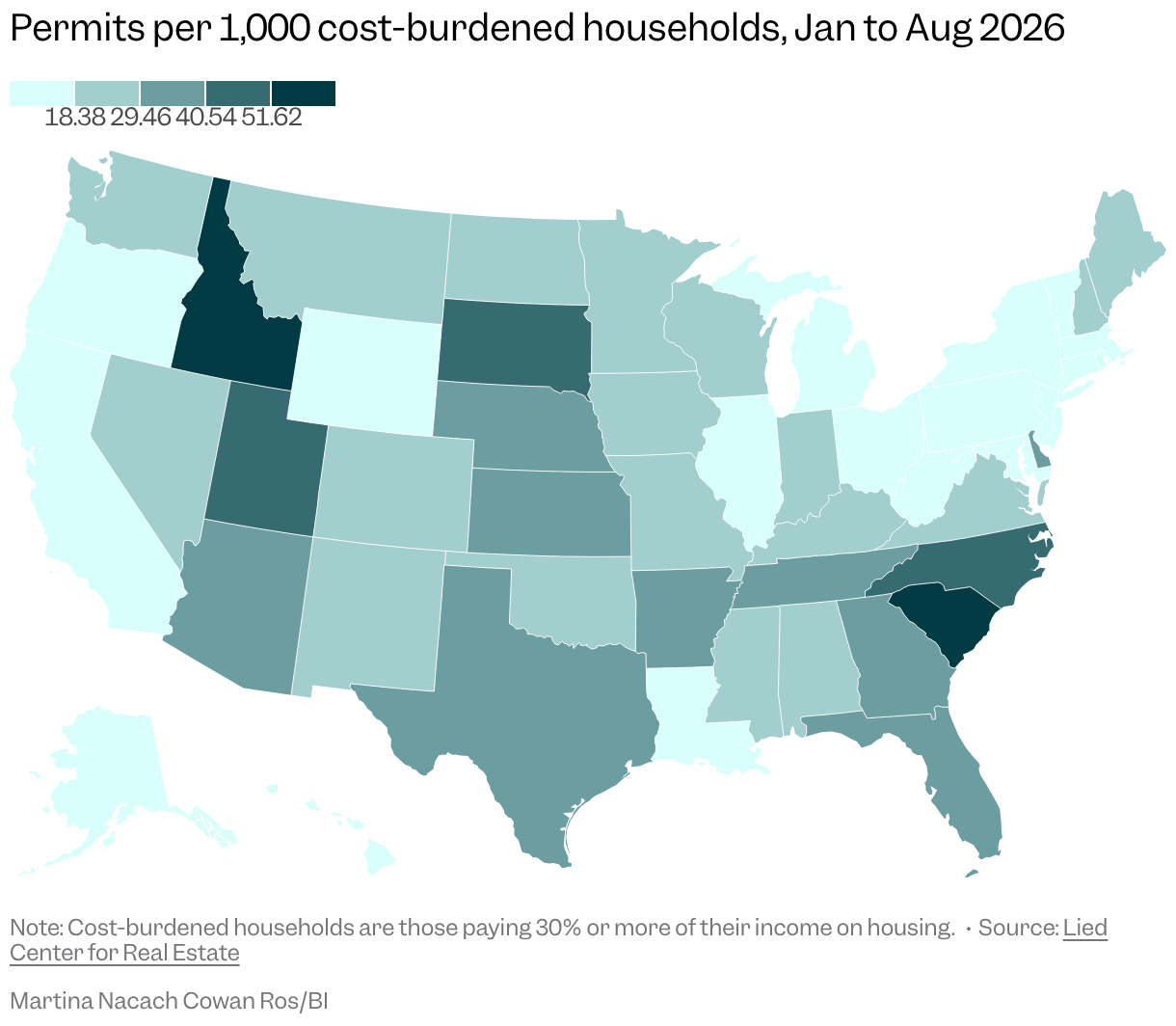
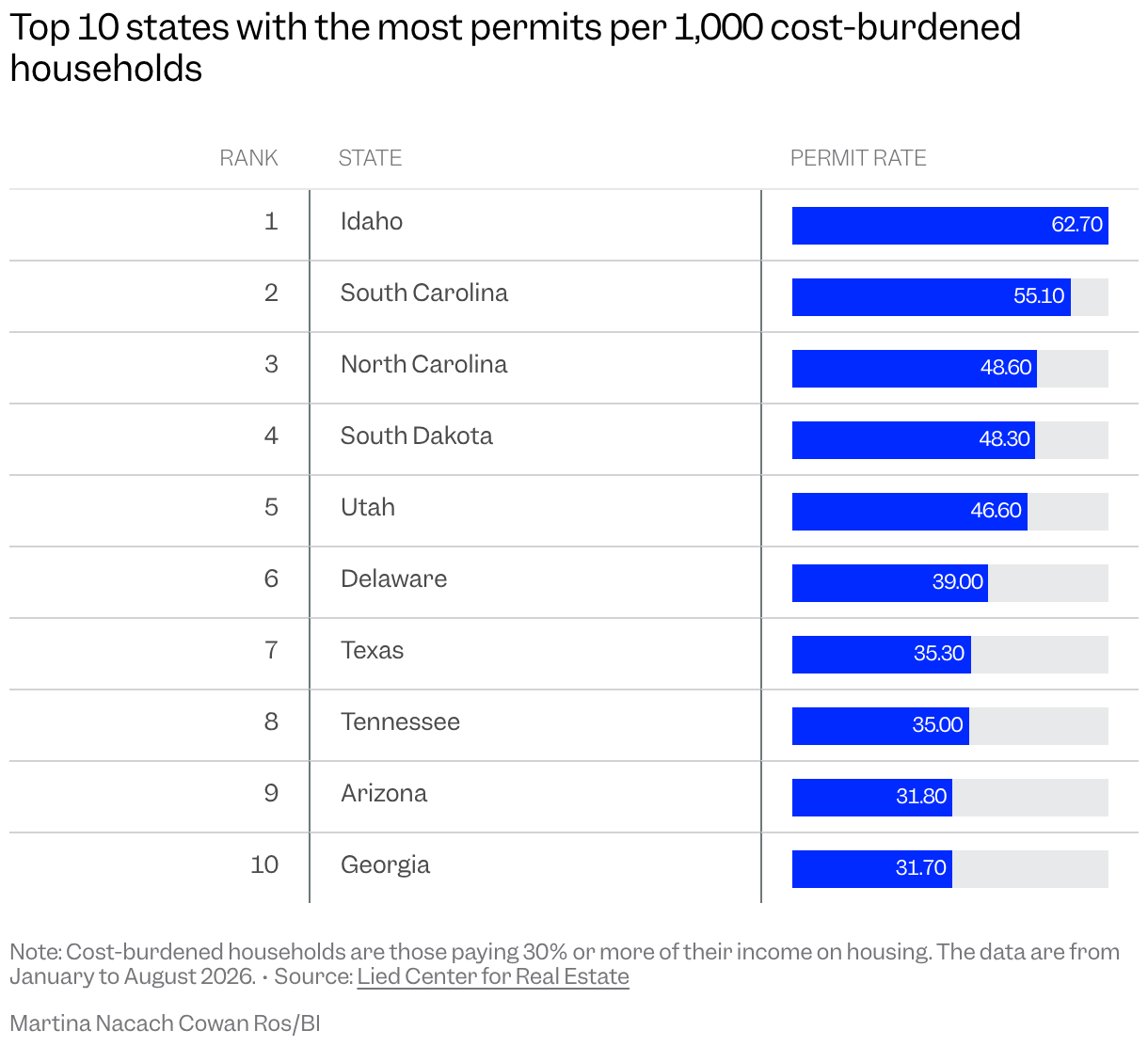
Idaho led with the most permits per 1,000 cost-burdened households, followed by South Carolina, North Carolina, and South Dakota. These were also the top four states with the most permits per resident, in the exact same order.
"It's the same states that are doing well in building that are also doing really well in servicing the cost-burdened households within that state," Irwin said.
This can happen through a process called "filtering," Irwin said. When new luxury apartments open, some households move from older apartments into those homes. The resulting vacancies can prompt landlords to lower rents or offer incentives, allowing other households to move into better-quality homes. Over time, this can make older apartments more affordable for lower-income renters.
"The ladder way is a good way to think about it: you just climb up the ladder," he said. "You build more luxury units; then every other unit is slightly worse in comparison — but being slightly worse increases vacancy, pushes down price, and people can reach up and grab that next year."
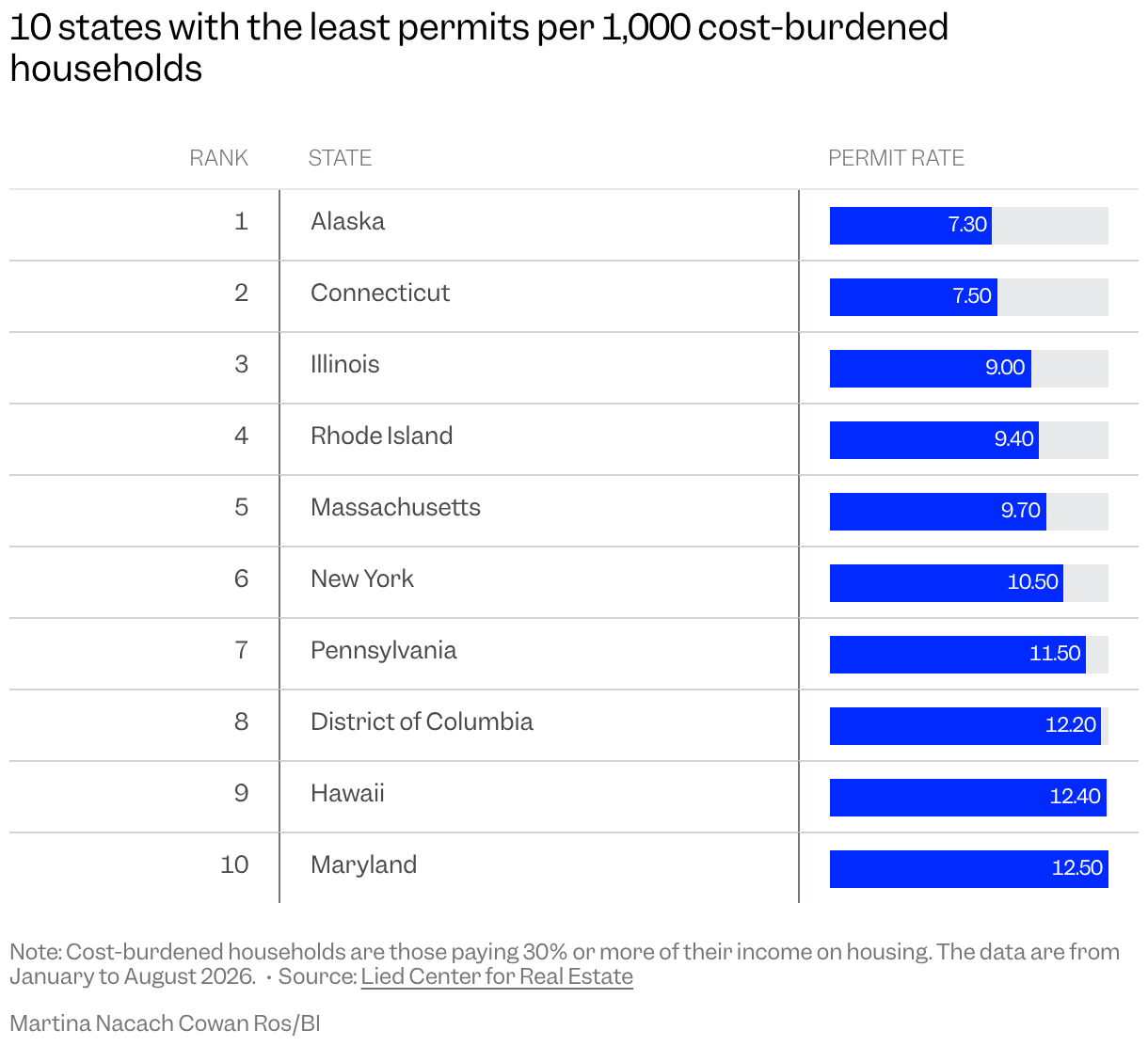
The states ranked at the bottom — and having the fewest permits per cost-burdened households — included Alaska at the top, followed by Connecticut, Illinois, and Rhode Island. Alaska is 68% behind the national average.
The lack of approved permits results in a lack of construction, which makes housing scarcer and more expensive. That can lock out would-be homeowners from the perks of investing in housing.
"It's a great way to build intergenerational wealth, a great way to get your kids into better school districts as well," he said. "If we can't offer that opportunity for people and sort of that opportunity for the broad middle class to thrive, I don't think that's a place where we want to be as a country."
Read the original article on Business InsiderThis story was first published by Business Insider. Read the original report
We use cookies to run this site and, with your consent, to measure traffic and improve our content. Necessary cookies are always on. You can accept all cookies or choose which ones to allow. Privacy policy.