Popular snack may help support brain health in older adults, new study finds
A small study found that eating skin-roasted peanuts daily for 16 weeks improved insulin responsiveness in memory-related brain regions of older adults.
A small study found that eating skin-roasted peanuts daily for 16 weeks improved insulin responsiveness in memory-related brain regions of older adults.
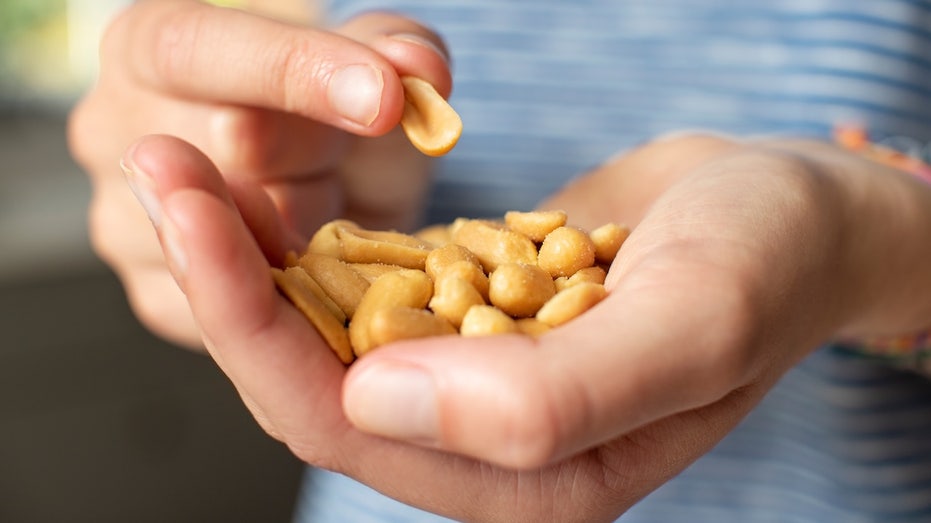
An unsuspecting snack could help support brain health in older adults, new research suggests.
A small study by researchers at Maastricht University Medical Center in the Netherlands, published in the journal Food & Function in September, found that eating peanuts regularly may improve how the brain's memory-related regions respond to insulin.
The study involved just 31 healthy older adults, and researchers did not determine whether the changes could prevent cognitive decline or Alzheimer's disease.
POPULAR FOODS AMERICANS EAT EVERY DAY LINKED TO SILENT BRAIN DAMAGE, ALARMING STUDY FINDS
In addition to regulating blood sugar, insulin helps nerve cells in the brain to grow and communicate with each other, which in turn can support overall cognitive function.
Consuming unsalted, skin-roasted peanuts every day positively affected insulin responsiveness in memory-related brain regions in older adults, the study found.
"This is an interesting study because we're increasingly recognizing that insulin plays an important role in brain health, not just blood sugar regulation," Kellyann Niotis, a New York-based preventive neurologist, told Fox News Digital. "Insulin has important functions in the brain, including supporting communication between brain cells and the processes involved in learning and memory."
The study involved 31 healthy adults between the ages of 60 and 75 who ate 60 grams, or around two servings, of peanuts daily for 16 weeks.
CLICK HERE TO SIGN UP FOR OUR LIFESTYLE NEWSLETTER
Participants could choose what time of day they ate the skin-roasted peanuts, which were provided in premeasured packets.
During a control phase of the study, participants did not eat any peanuts.
Using MRI scans to measure various aspects of brain health, the researchers discovered that eating peanuts every day for 16 weeks led to an approximately 4% increase in overall blood flow in the brain.
Researchers also observed improved insulin responsiveness in memory-related brain regions, including the hippocampus.
CLICK HERE FOR MORE LIFESTYLE NEWS
"We know that insulin resistance and metabolic dysfunction are associated with an increased risk of cognitive decline and Alzheimer's disease," Niotis said. "What we're still trying to understand is whether improving insulin signaling specifically within the brain can help prevent or delay AD."
The study found that daily consumption of about 60 grams of unsalted, skin-roasted peanuts for 16 weeks may benefit brain insulin responsiveness in older adults.
"I would not interpret these findings as evidence that peanuts prevent Alzheimer's. And it's unlikely that one food will ever have that much power," Niotis said. "The strongest nutritional evidence continues to support overall dietary patterns, rather than any single food."
TEST YOURSELF WITH OUR LATEST LIFESTYLE QUIZ
Because this was such a small study, she added, researchers "don't yet know whether these changes translate into meaningful benefits for memory or long-term brain health."
The research was funded by the Peanut Institute Foundation, which the study reported had no role in its design, analysis or publication decisions.
"I would much rather see someone focus on eating a Mediterranean-style diet consistently than worry about whether they're eating enough peanuts," Niotis said.
This story was first published by Fox News - Latest. Read the original report
We use cookies to run this site and, with your consent, to measure traffic and improve our content. Necessary cookies are always on. You can accept all cookies or choose which ones to allow. Privacy policy.