The drone-delivery boom could be a nightmare for people traumatized by war
For those who have lived under armed drones, the sound overhead can be distressing.
For those who have lived under armed drones, the sound overhead can be distressing.
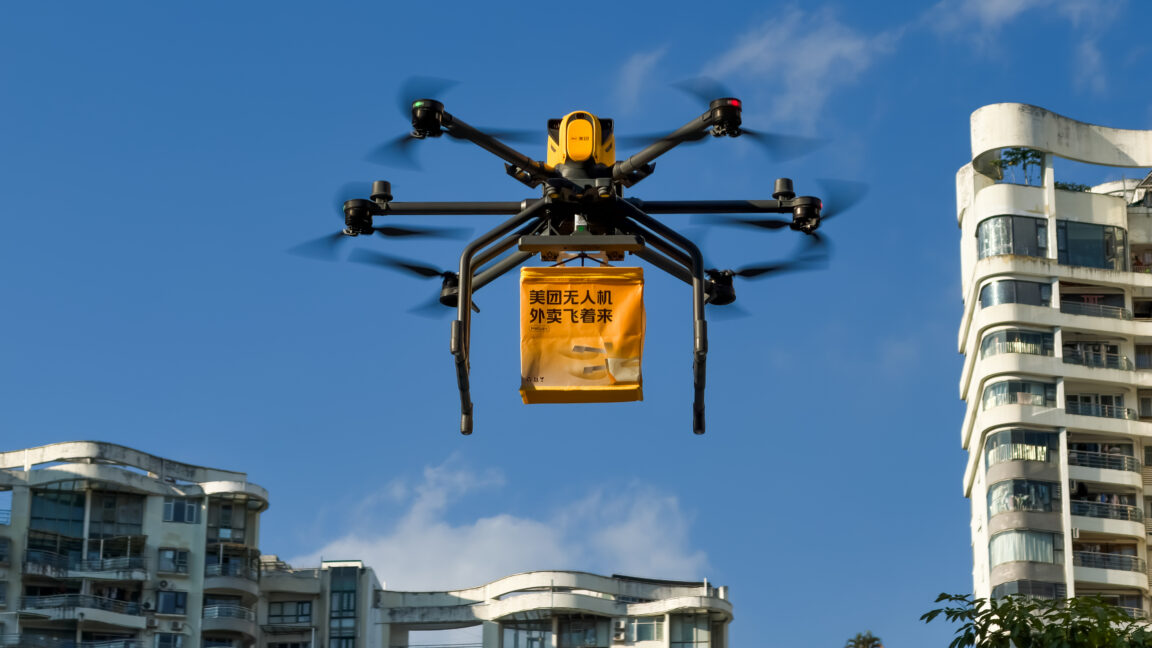
In August, Amazon announced plans to expand its Prime Air delivery drone program to “nearly 500 cities and towns by the end of 2026." Combined with similar uncrewed aerial delivery programs from DoorDash and Zipline (in partnership with Uber and Walmart), the expansion suggests that flying robots dropping their payloads onto suburban lawns will soon be commonplace.
For many people, delivery drones will be little more than a novelty, occasionally good for a laugh when one does something ridiculous. For others, though, their growing use could be a nightmare. As the instant delivery industry clears the last FAA hurdles to rapid deliveries beyond an operator's line of sight, an increasing number of people worldwide are living with post-traumatic stress disorder or other anxiety-related disorders triggered by drones.
The use of all manner of weaponized drones in the ongoing war in Ukraine and in Israeli attacks on Lebanon and Gaza has already produced an epidemic of what some mental health professionals have dubbed “dronophobia.” And while relatively few US troops have been targeted by drones flown by Iran, ISIS, and Iran-backed militias throughout the Middle East, even those who have not directly been attacked may experience anxiety simply because of the ample video footage of attacks circulating in news and social media.
This story was first published by Ars Technica. Read the original report
We use cookies to run this site and, with your consent, to measure traffic and improve our content. Necessary cookies are always on. You can accept all cookies or choose which ones to allow. Privacy policy.