


Obama appointee’s Chicago immigration order backfires after court says she went too far
An appellate court panel found 2-1 that Judge Sarah Ellis' order attempted to establish "the district court as the supervisor of all Executive Branch activity in the city of Chicago."
An Obama-appointed federal judge’s attempt to rein in immigration enforcement in Chicago backfired after a federal appeals court ruled she overstepped her authority and "effectively established the district court as the supervisor of all Executive Branch activity in the city of Chicago."
A three-judge panel of the U.S. Court of Appeals for the 7th Circuit tossed out Judge Sara Ellis’s preliminary injunction and dismissed the appeal in a sharply-worded 2-1 decision.
The panel, comprising two Trump appointees and a Reagan appointee, said the lower court’s injunction was "overbroad" and "constitutionally suspect." It faulted the judge for applying the order not just to specific officers but "the entire Departments of Homeland Security and Justice, as well as anyone acting in concert with them."
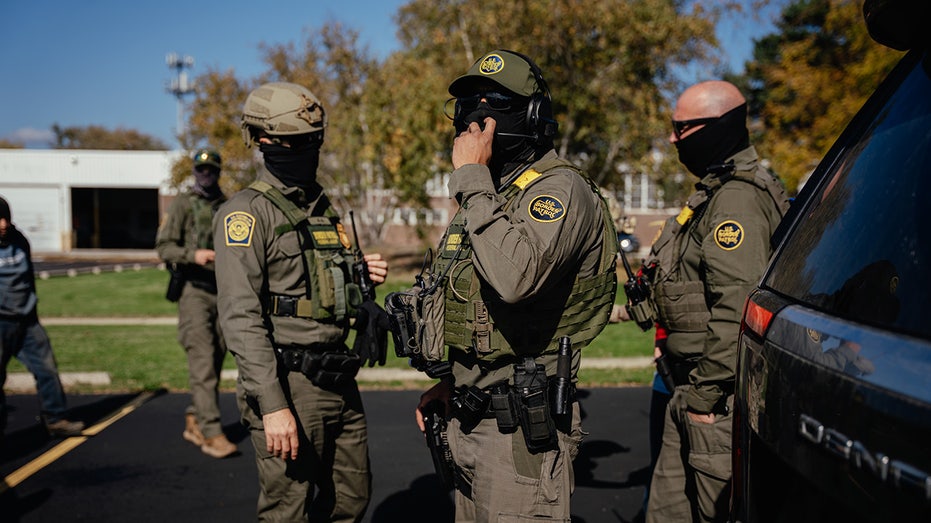
Ellis had issued a lengthy 233-page opinion explaining why she granted the class-wide preliminary injunction against Department of Homeland Security and Department of Justice authorities carrying out immigration enforcement in Chicago. Her order followed a string of clashes between protesters and agents during Operation Midway Blitz, the effort launched last year by the Trump administration to crack down on illegal immigration and street crime in Chicago.
Ellis justified the injunction by saying it was not novel and that it only ordered federal agents to follow current DHS policies regarding use of force and body-worn cameras.
"In other words, the Court’s order should break no new ground, and indeed it tracks similar orders entered in other crowd control cases across the country," Ellis said.
The appeals court had previously paused her injunction, warning that its "practical effect" was "to enjoin all law enforcement officers within the Executive Branch."
The order, the panel said, required federal officers to submit "all current and future internal guidance, policies, and directives" for judicial review, which the appellate court said improperly intruded on the separation of powers.
The panel reiterated that point when vacating Ellis’ injunction, saying that "federal courts do not exercise general oversight of the Executive Branch" and that the district court "likely abused its discretion by issuing such a sweeping injunction."
FEDERAL JUDGE RESTRICTS ICE AGENTS AMID ONGOING MINNEAPOLIS AREA PROTESTS
The panel's order came after the plaintiffs, who included groups of protesters and journalists, had also already moved to dismiss their own lawsuit, saying that Operation Midway Blitz had largely ended. The panel said it felt it was still necessary to address Ellis’ order to prevent it from "spawning any legal consequences."
Judge Frank Easterbrook, the Reagan appointee on the panel, dissented, arguing that only the appeal should have been dismissed since both sides had asked for that.
The majority, however, said that also throwing out the injunction was "the best way to wipe the slate clean" in what it called an "extraordinary case."
Jonathan Turley, a George Washington University law professor, said the appellate court "delivered a haymaker" to Ellis.
In a statement, Attorney General Pam Bondi called the 7th Circuit's decision a "huge legal win."
"President Trump is trying to protect American citizens while local elected officials REFUSE to do so. [DOJ] attorneys were proud to argue this case," Bondi said. "We will continue fighting and WINNING for the President's law-and-order agenda."
Former longtime federal prosecutor Bill Shipley said on X the panel effectively told Ellis, "You don't get to run DHS and DOJ."
Still, some critics found the 7th Circuit's ruling excessive and commended Ellis for being thorough.
"Ellis was one of the only judges who did anything about the series of escalating abuses from CBP," CATO Institute's David Bier wrote on X. "She investigated and found numerous instances of perjury, constitutional violations, and other crimes. This unnecessary lecture from the 7th circuit amounts to: stop it."