


Navy SEAL veteran warns China, Russia are watching US-Iran war to gauge American military strength
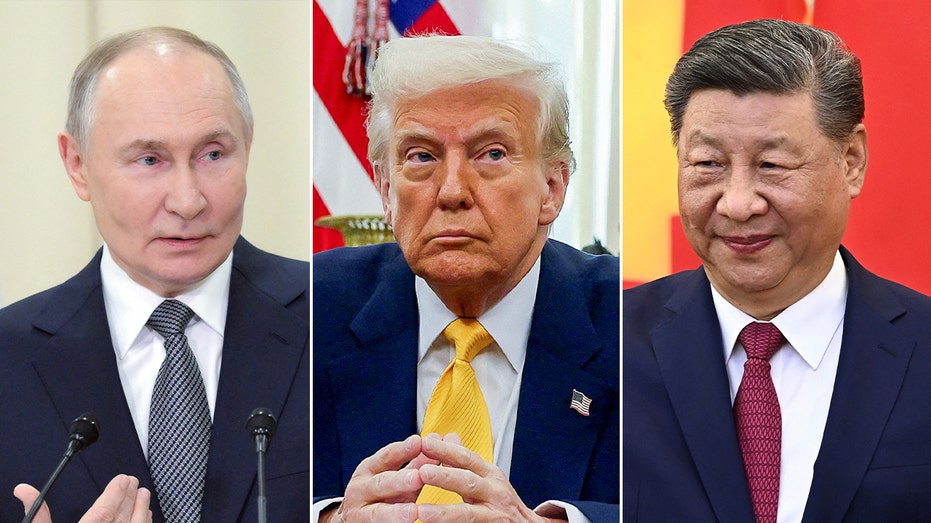
Navy SEAL veteran Jack Carr warns that foreign adversaries like China and Russia are watching the Iran war closely to assess U.S. military capabilities.
Navy SEAL veteran Jack Carr warned that U.S. foreign adversaries will take note if the United States loses the Iran War as the conflict drags into a third month.
Carr said nations like China and Russia are watching U.S. military actions, taking note of American capabilities, while referencing the lessons the nations learned from the United States' handling of the Afghanistan War.
"What do we think North Korea is learning? What do we think Iran is learning from what we did in Afghanistan and how we spent 20 years there — we had 20 years to prepare to exit and that was the best that we could do?" Carr said on "Hang Out with Sean Hannity."
"They're taking lessons from that. That's why what we're doing now is a reset."
MORNING GLORY: TRUMP HAS RESTORED THE GOP AS THE PARTY OF DEFENSE AND DETERRENCE
The SEAL veteran said President Donald Trump’s war on Iran is a "reset," and foreign adversaries are monitoring the outcome.
"This is really an opportunity for us to reestablish ourselves and reestablish that deterrence that we enjoyed for so long following World War II," Carr told Fox News.
He reflected on the impact of U.S. failures in Afghanistan, arguing that the weak exit in 2021 left international enemies with more confidence to take military action.
Days before the U.S. troop withdrawal, a suicide bomber killed about 170 Afghan civilians and 13 U.S. service members — an attack that drew criticism of the quick exit.
The Afghanistan War (2001–2021) has faced scrutiny as an endless and costly conflict, with critics questioning whether the fight was worth the loss of lives and resources.
Carr said the conflict degraded the United States' power to control global order and stability, pointing to weak military strategy during the conflict.
IRAN STRIKES COULD SIGNAL LIMITS OF BEIJING, MOSCOW’S POWER AS US FLEXES STRENGTH
"After Afghanistan and certainly after Iraq, we lost that ability to deter just by being the United States of America because our enemy said, ‘Look, this is the best they can do? This is how we leave Afghanistan? This is what they did for 20 years there? This is what they did for this decade-plus in Iraq? OK, I think we can get away with X, Y and Z because the United States does not know how to effectively and efficiently deploy their military and employ their military."
Carr said China will "take lessons" if the United States fails in the Iran conflict and suggested it could give Beijing the military confidence to invade Taiwan.
"We have to win because if we do not win this thing, then they take another lesson, China specifically," he said. "They take lessons about Taiwan from that if we lose. So, the stakes are pretty high."
Carr also argued the U.S.-Iran conflict is less about the global economic impact, like surging oil prices caused by the Strait of Hormuz’s closure, and more about global order and stability.
He emphasized the importance of U.S. success in the Iran conflict as foreign adversaries watch to assess American military capabilities.
"That's why these stakes are so high. This is why… the outcome of what's happening in Iran right now is so important, not just for the administration or not just for the region, but for the world," he concluded.
Carr's full conversation with Sean Hannity is available now on the "Hang Out with Sean Hannity" podcast.