


Colombian military neutralizes five terrorists accused in bus bombing that killed 20, injured 45 civilians
Colombian military forces neutralized five members of the militant group allegedly responsible for the bus bombing that killed 20 civilians in Cauca.
Colombian military forces announced on Wednesday they successfully neutralized five members of the militant group responsible for a devastating bus bombing that killed 20 civilians and left 45 others injured.
In a statement from the Military Forces of Colombia, officials said the neutralized suspects were members of the "Estructura Jaime Martínez," an organized armed group.
In addition to planting the explosives in the municipality of Cajibío, authorities claim the group's criminal activities included stealing vehicles along the Pan-American Highway and indiscriminately deploying drones loaded with explosives.
SCHOOL BUS DRIVER CHARGED WITH HOLDING GIRL CAPTIVE FOR 12 YEARS
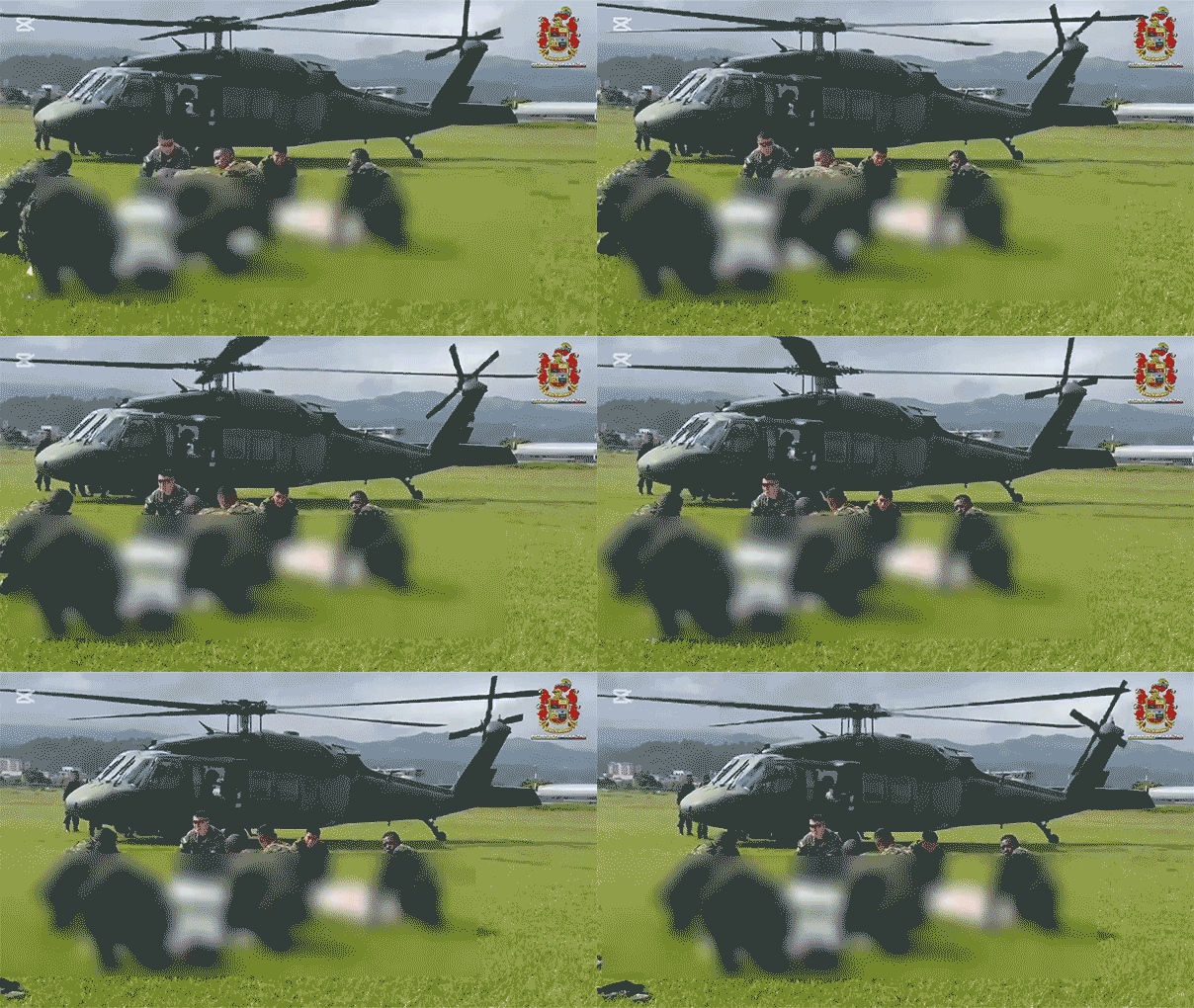
A video shared along with the statement appeared to show body bags laid out in front of a military helicopter and numerous seized weapons.
The military retaliation followed an April 26 terror attack, when an explosive device detonated on a passenger bus traveling along the Pan-American Highway in the volatile Cauca region.
The blast killed 15 women and five men, according to a report from The Associated Press.
COLOMBIAN PRESIDENT PETRO THREATENS MILITARY RESPONSE AFTER TRUMP WARNS COLOMBIA MAY BE NEXT TARGET
While initial local reports said 36 people were injured, including several children, the Colombian military's recent update noted that 45 civilians were wounded in the explosion.
Gen. Hugo López, commander of Colombia's armed forces, quickly condemned the bus bombing as a "terrorist act."
He attributed the attack to dissident factions of the defunct Revolutionary Armed Forces of Colombia (FARC), specifically pointing to the Jaime Martínez faction and the network of "Iván Mordisco," one of the country's most wanted figures.
The U.N. high commissioner for human rights previously urged authorities to "guarantee justice for the victims."
Southwestern Colombia has become a battleground for illegal armed groups vying for control over coca leaf cultivation areas and crucial drug trafficking routes leading to Central America and Europe.
The Associated Press contributed to this report.