International News Portal9 November 2026Headlines from established publishers
World
Jesus’ Galilee ministry site reveals rare, tiny stone after student's surprising find
A young student discovered a rare Nicolo gemstone at Korazim National Park, a biblical site linked to the ministry of Jesus near the Sea of Galilee. Here are details.
A sixth grader uncovered a rare gemstone at a biblical site linked to Jesus' ministry, a find that sheds light on life in ancient Galilee.
The discovery, announced by the Israel Nature and Parks Authority (INPA) in early June, was made at Korazim National Park near the Sea of Galilee.
Identified with the biblical village of Chorazin, Korazim is mentioned in the New Testament as a place where residents witnessed Jesus' miracles but failed to repent.
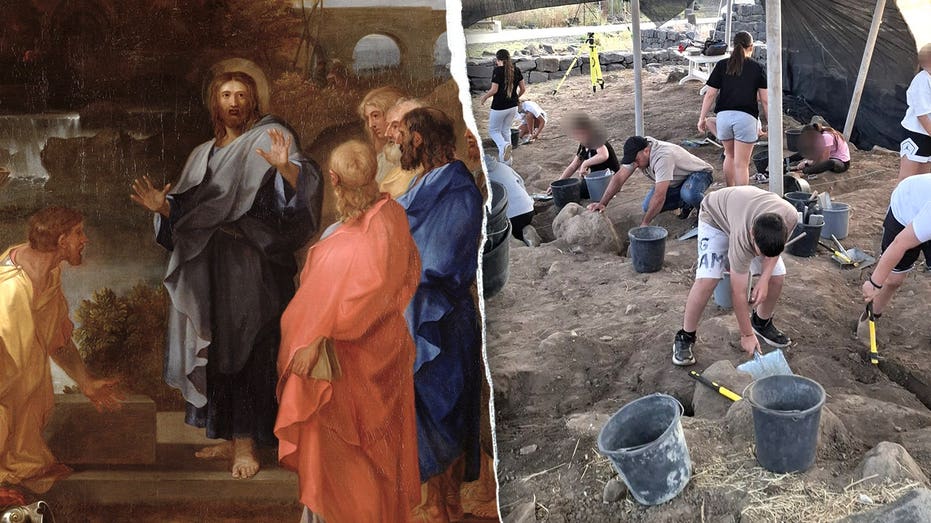
The sixth grader was taking part in a community excavation program that allows local students to work alongside archaeologists and learn about ancient life, organized by the INPA in partnership with Ariel University.
Horowitz told officials he found the gemstone just minutes before the dig wrapped up.
"After three days of digging, about 10 minutes before we finished, I was digging with my trowel and suddenly saw something blue, round and special," Horowitz said in a statement.
"I picked it up and showed it to the archaeologist. When I understood it was something rare, I felt really happy and proud. I received a lot of appreciation from my friends, teachers and family."
The gemstone was likely part of an expensive ring worn by a local elite, said Achia Kohn-Tavor, director of excavations at Chorazin.
Kohn-Tavor identified the gemstone as a Nicolo, a rare variety of agate that was considered a luxury item in the Roman and Byzantine eras.
"It was found inside a wealthy estate, suggesting it belonged to a member of an affluent household," Kohn-Tavor told Fox News Digital.
"Archaeologists believe it could have belonged to either a man or a woman."
While archaeologists do not know how the stone ended up buried at the site, they believe it reached Korazim through long-distance trade routes that connected the region to the broader Roman and Byzantine world.
"The stone was not locally sourced," he added. "Its presence indicates the owner had access to international luxury goods."
Horowitz is not the first Israeli child to stumble upon a remarkable archaeological find.
In May, officials announced that an 8-year-old boy from Rehovot found a 1,700-year-old Roman statuette fragment.
We use cookies to run this site and, with your consent, to measure
traffic and improve our content. Necessary cookies are always on. You
can accept all cookies or choose which ones to allow.
Privacy policy.